About
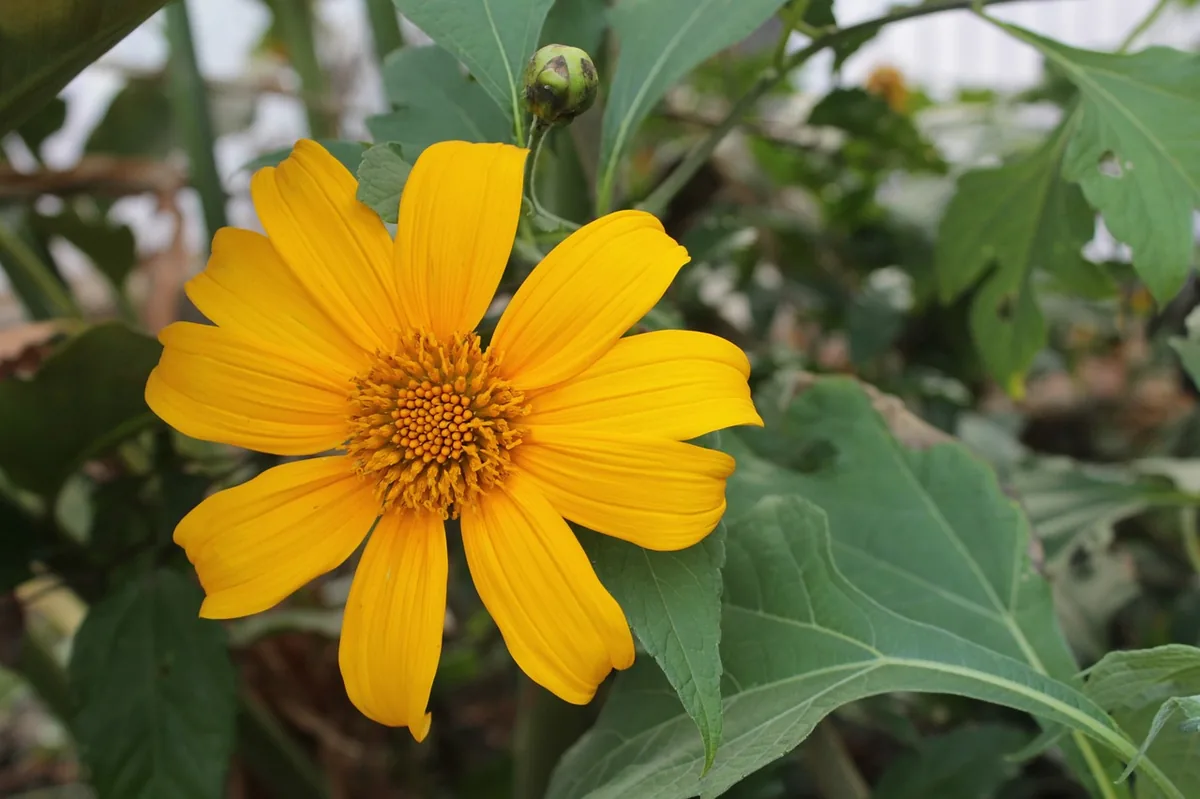
Tithonia, commonly known as Mexican Sunflower, is a fast-growing, heat-tolerant flowering plant that produces vibrant orange-red blooms. It reaches heights of 1.5–3 meters (5–10 feet) and spreads widely, making it an excellent choice for borders and hedgerows. The plant thrives in full sun and well-drained soil, showing remarkable drought resistance. The large flowers attract pollinators such as butterflies, bees, and hummingbirds, making it a valuable plant for biodiversity. It is also an excellent biomass producer, contributing rich organic matter when used as a green mulch or compost. Prefers full sun (6+ hours of direct sunlight). Well-drained, moderately fertile soil is ideal. Drought-tolerant but benefits from occasional deep watering in dry conditions. Seeds: Direct sow after the last frost or start indoors and transplant. Cuttings: Can be propagated from semi-hardwood cuttings. Blooms continuously in warm seasons. Cut flowers for arrangements or seed collection when mature.
Permaculture Functions
- Pollinator: Plate-sized orange-red daisy heads keep pumping nectar through humid heat when many annual vegetables have stopped flowering -- pulling honeybees, butterflies, and hummingbirds to the back edge of the bed.
- Wildlife Attractor: Tall inflorescences act like beacons for swallowtails and sulphurs that cruise above low herbs -- seed heads left late feed finches once frost thins other forage.
- Mulcher: Stems cut knee- to chest-high before seeds mature make a wet, fast-heating layer -- in compost or chop-and-drop beside heavy-feeding corn and squash.
- Dynamic Accumulator: Soft succulent stems take up nutrients from fresh manure or compost side-dressings and return them to the soil surface -- when laid as green mulch after cutting.
- Border Plant: A single row screens compost piles, tanks, or neighbor windows in one season -- without casting the decades-long shade of a planted timber hedge.
Field Observations
- No field observations yet
Companion Planting
Threats & Pressure