About
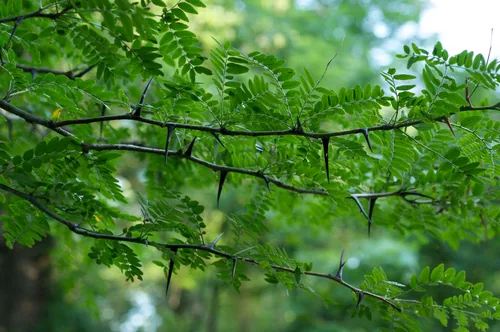
Honey locust is the legume tree that dropped medieval armor for suburbia: wild types bristle with thorns; nursery cultivars go bare-legged and polite. Drought-tough, sun-hungry, and happy on poor soils — it fixes nitrogen enough to matter in polyculture talk without pretending to be a bean patch. Full sun for strong form and pod production. Tolerates drought once established; wet feet invite decline. pH flexible; compaction bothers it less than most ornamentals. Seeds: scarify and soak — hard seed coat is a gatekeeper. Grafted cultivars: propagate by budding to keep thornless, predictable habits. Transplant young bareroot trees in cool, wet seasons. Livestock pods: collect when pods rattle but before heavy worm damage -- taste-test livestock response in small increments. Coppice wood on multi-year rotations for fence posts where thorns are acceptable. Flowers feed pollinators -- avoid wholesale canopy removal during peak bloom.
Permaculture Functions
- Nitrogen Fixer: Gleditsia triacanthos fixes enough nitrogen in woody biomass and leaf litter to show up in soil tests under old street trees -- design guilds expecting a modest N credit, not a substitute for legume ground covers in the vegetable rotation.
- Animal Fodder: Sweet pulp inside long leathery pods fed cattle and hogs historically; modern thornless cultivars vary in sugar -- introduce any new pod ration slowly and watch for founder because high pod loads can loosen manure.
- Wildlife Attractor: Cream panicles feed bees in late spring; mature pods rattle seed that deer and squirrels strip before winter -- leave a few trees un-mowed beneath if you want volunteer seedlings for wildlife cover on rough ground.
- Shade Provider: Fine bipinnate leaves cast filigree shade that lets underplanted clover and comfrey keep photosynthesizing at noon -- place north of solar panels or south-facing beds where you want summer cooling without full evergreen darkness.
Companion Planting
- Confusing wild thorny volunteers with child- and pet-safe yards
- Heavy shade — gets leggy and sullen
Threats & Pressure
- Banded Cucumber Beetle
- Bean Aphid
- Bean Leaf Beetle
- Bean Weevil
- Borers
- Corn Earworm
- Cowpea Curculio
- Fall Armyworm
- Kudzu Bug
- Locust Borer
- Locust Leaf Miner
- Lubber Grasshopper
- Pea Moth
- Pea Weevil
- Reniform Nematode
- Root Aphid
- Scale Insects
- Soybean Looper
- Spittlebugs
- Stink Bug
- Striped Cucumber Beetle
- Spotted Cucumber Beetle
- Brown Marmorated Stink Bug
- Harlequin Ladybird
- Velvetbean Caterpillar