About
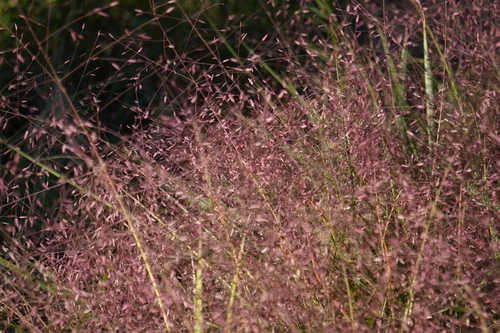
Purple lovegrass (Eragrostis spectabilis) is a short-lived to perennial bunchgrass of eastern North American dry roadsides, glades, and prairie edges, famous for airy panicles that blush reddish purple in late summer and catch backlight like smoke. Clumps reach 1–2 feet (30–60 cm), seeding gently into gravel and sunny gaps. It is a staple for green roofs, hellstrips, and meadow matrices that need fine texture without bamboo ambition. Full sun for strongest color and flowering; shade yields green anonymity. Lean, well-drained soils are ideal; tolerates drought and occasional salt splash along paths. Avoid wet clay that rots crowns; water only to establish. Sow seed in fall or early spring; lightly cover—germination improves with warmth. Divide small clumps in spring if you must; plants often perform better from seed in lean sites. Cut back seed heads before they tumble into neighbor’s perfection if needed. Cut inflorescences for dried arrangements when color peaks but before shattering. Leave some seed for ground-feeding birds. Peak display tracks late-summer heat and shortening days, not imported holiday schedules.
Permaculture Functions
- Ornamental: Eragrostis spectabilis panicles blush violet-red in late summer backlight, reading as smoke above blue grama lawns -- short-lived in rich irrigation; lean gravel extends color honesty two or three seasons.
- Erosion Control: Fibrous bunch roots anchor road cuts, green roofs, and hellstrip berms where shallow soil would wash -- tolerates occasional salt splash from winter brine if crowns stay drained.
- Ground Cover: Fine-textured tufts fill gaps between coneflowers and bergamot without stolon takeover -- self-sows into gravel; delightful or deplorable depending on driveway diplomacy.
- Wildlife Attractor: Tiny seeds feed juncos and sparrows; basal clumps shelter ground beetles -- leave winter skeletons standing until spring warm if insect overwintering matters more than tidy curb appeal.
Companion Planting
- Self-sowing in gravel — delightful or deplorable depending on driveway politics
- Short-lived in rich irrigated beds—lean soil extends lifespan and color honesty
Threats & Pressure