About
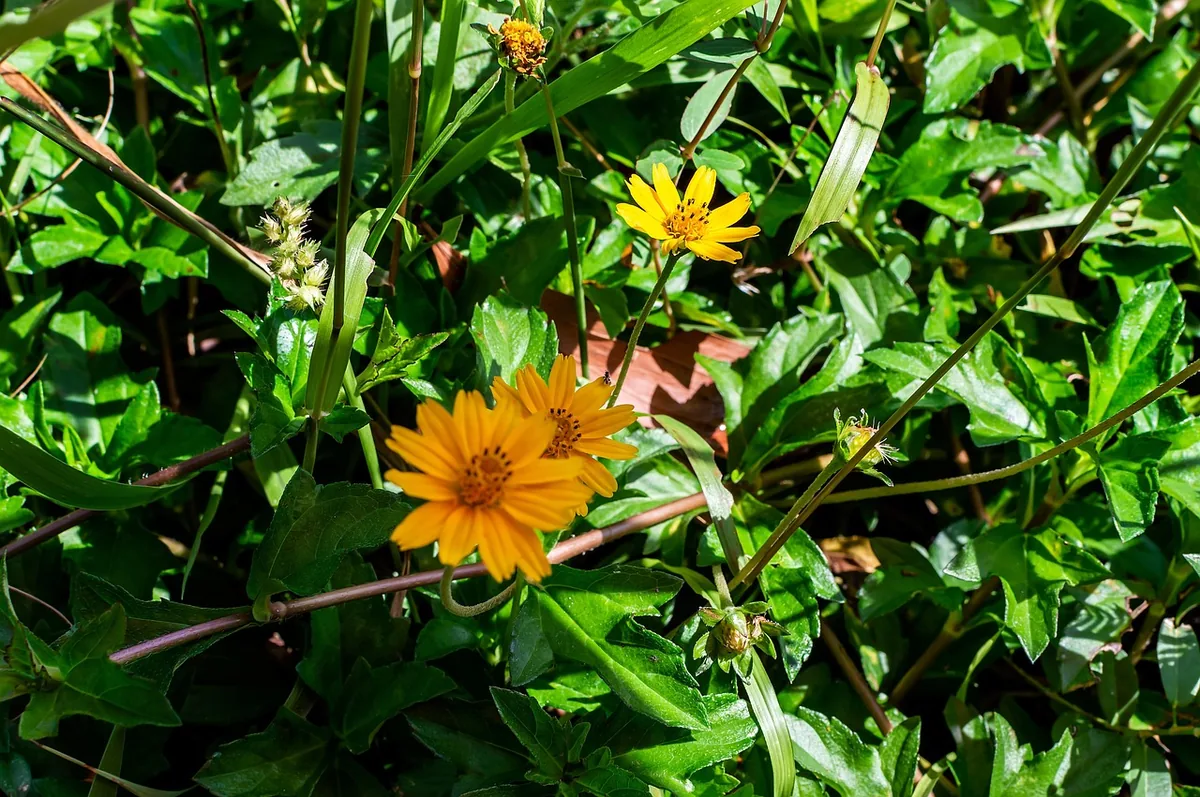
Singapore Daisy is a vigorous, mat-forming perennial herb that typically grows up to 70 cm (27.5 inches) tall when flowering. It features glossy dark green leaves, usually with three pointed lobes and toothed edges, arranged in opposite pairs along green or reddish hairy stems that can reach up to 2 meters (6.5 feet) in length. The plant produces bright yellow to orange-yellow daisy-like flowers, approximately 2-3 cm (0.8-1.2 inches) in diameter, throughout the year, with a peak flowering period from spring to autumn. While it is often used as an ornamental ground cover due to its dense foliage and attractive flowers, Singapore Daisy is considered invasive in many regions, as it can outcompete native vegetation and disrupt local ecosystems. :contentReference[oaicite:0]{index=0} Singapore Daisy thrives in full sun to moderate shade, flowering more abundantly in sunny positions. It is highly adaptable to various soil types, preferring moist, well-drained soils but also tolerating dry conditions, temporary inundation, and drought. The plant is notably salt-resistant, making it suitable for coastal areas. :contentReference[oaicite:1]{index=1} Propagation is primarily vegetative, as seeds are usually not fertile. The plant readily roots at stem nodes, and new plants can grow from small stem fragments. Tip cuttings are very easy to root and are commonly used for propagation. :contentReference[oaicite:2]{index=2} As an ornamental ground cover, Singapore Daisy does not have specific harvest times. However, regular pruning or mowing may be necessary to manage its growth and prevent it from invading unintended areas. Care should be taken to properly dispose of plant material to prevent unintentional spread. :contentReference[oaicite:3]{index=3}
Permaculture Functions
- Ground Cover: Sphagneticola trilobata runners sprint across humid roadsides into dense mats that choke understory seedlings -- containment only succeeds where bureaucracy matches shovel hours.
- Erosion Control: Stolon roots knit wet ditch banks faster than natives return on disturbed Caribbean fill -- regulators flag this aster on invasive lists for exactly this reason.
- Pollinator: Small yellow-ray heads feed sweat bees -- best deployed along berms already lost to creeping oxeye dominance where containment is the only goal.
Field Observations
- No field observations yet
Companion Planting
No companion data yet.
- Native Plants (to prevent competition and displacement)
Threats & Pressure