About
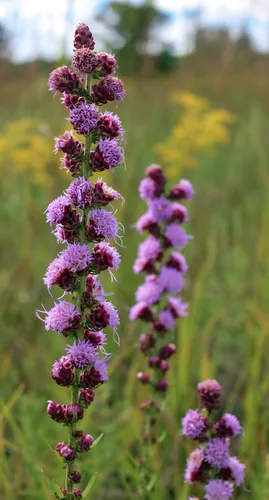
Rough blazingstar (Liatris aspera) is a taprooted prairie perennial of central and eastern North America, with stiff, rough leaves and tall spikes of purple florets opening top-down in late summer. Plants reach 2–4 feet (60–120 cm), often on dry slopes and sandy soils where less rugged forbs surrender. It is a monarch-supporting landscape companion when combined with milkweeds, and a vertical accent in meadow mixes that refuse irrigation. Full sun for upright stems and dense spikes; shade invites leaning and fewer flowers. Dry to average, well-drained soils are native truth; tolerates drought once established. Avoid wet clay that rots taproots; mulch lightly without burying crowns. Sow seed with cold-moist stratification or direct-sow in fall. Division is difficult due to taproot—prefer seed for large areas. Cut old stems in late winter if tidy gardens matter; otherwise leave for insects. Cut flowering stems for dried arrangements when color holds along the spike. Leave seed heads for finches. Bloom peaks in late warm season when many early flowers have retired.
Permaculture Functions
- Pollinator: Liatris aspera purple disk-florets open top-down in late summer, handing nectar to bumblebees and monarchs refueling after milkweed brood work -- spikes stay honest in dry sun; shade makes stems lean and cheat pollinators of landing pads.
- Wildlife Attractor: Goldfinches shred fluffy seed heads into winter; hollow standing stalks house cavity-nesting bees if you skip November mower cosplay -- leave a patch unmowed for honest bird and bug rent.
- Ornamental: Rough sandpapery leaves and stiff 2–4 ft wands punctuate little bluestem matrices with vertical rhythm -- rough foliage earns long sleeves during planting days, not bandages from denial.
- Erosion Control: Carrot-thick taproot anchors sandy cuts and glade shoulders where shallow annuals wash out in gully washers -- refuse wet clay invitations; wet feet rots crowns while you blame bad luck.
Companion Planting
- Wet clay and irrigation addiction—taproot species rot while you blame genetics
- Rough leaves irritate bare arms—long sleeves beat dramatic bandaging later
Threats & Pressure