About
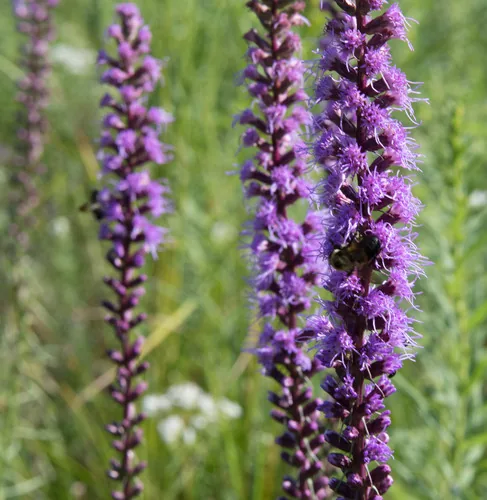
Dense blazingstar (Liatris spicata) is a hardy prairie perennial famous for tall spikes of purple-pink florets opening top-down along a vertical wand, a flag for monarchs and other pollinators in mid to late summer. Plants typically reach 2–4 feet (0.6–1.2 m) from corms, with grass-like basal leaves. It belongs in rain garden bottoms, meadow mixes, and sunny borders across temperate North America cultivation. Full sun for stiff stems; shade invites flop and reduced flowering. Tolerates moist soils better than many Liatris species—useful in swales—yet still demands drainage between inundation events. Drought after establishment is acceptable on deeper soils. Divide corm-like bases in early spring before shoots elongate; replant at original depth. Sow seed outdoors with winter chill or stratify artificially; seedlings take a few years to reach blooming size. Avoid frequent disturbance once clumps are performing—Liatris resents tourist shovels. Cut a few spikes for dried arrangements at peak color; leave the majority for insects migrating through. Seeds mature into fluffy heads finches enjoy if you delay cleanup. Mark locations in fall—dormant corms are easy to spear with spring enthusiasm.
Permaculture Functions
- Pollinator: Liatris spicata purple-pink florets open top-down on tall spikes during mid- to late-summer nectar gaps -- for monarchs and specialist bees.
- Wildlife Attractor: Fluffy seed heads feed finches and overwintering beneficials -- if cleanup waits until late winter.
- Ornamental: Vertical wands break the horizontal line of grasses and flat composites -- in rain gardens and prairie mixes.
- Erosion Control: Corm-like bases and fibrous roots stabilize moist sunny banks and swale bottoms -- in masses.
Companion Planting
- Wet winter dormancy on compacted clay — corms rot if water sits on frozen ground
- Overfertilized rich beds — tall weak stems that lodge during summer storms
Threats & Pressure