About
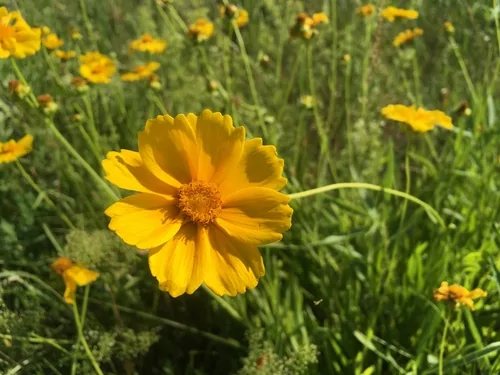
Lanceleaf coreopsis (Coreopsis lanceolata) is a sunny perennial wildflower of prairies, roadsides, and open woods in eastern and central North America, with lance-shaped leaves and large golden-yellow ray flowers on wiry stems that dance in wind like they owe money to gravity. It is a dependable pollinator plant for bees and butterflies and a self-seeding citizen in meadow mixes—sometimes enthusiastic enough to need editing. Use it in rain-garden berms, pollinator strips, and chop-and-drop edges where turf is a political statement you lost. Full sun; lean, well-drained soils reduce flop and prolong bloom. Tolerates drought once established; overwatering and rich compost produce lush stems that lodge in storms. Not for deep shade or soggy clay without amendment. Cold-hardy into northern temperate zones; wet winters on heavy soil can shorten lifespan—treat as short-lived perennial and allow self-sowing. Sow seed in fall or early spring; barely cover. Divide mature clumps in early spring or fall to refresh vigor. Deadhead to extend bloom or allow seed for finches and natural regeneration. Cut spent stems in late winter for insect nesting habitat where tidy culture is not law.
Permaculture Functions
- Pollinator: Coreopsis lanceolata opens big golden rays on wiry stems that hoverflies and small bees work in prairie sun -- blooms bridge early spring bulbs and late summer composites.
- Ornamental: Long-season yellow faces cheap on irrigation -- mass in lean soil so stems stay upright; rich compost makes plants flop like overcooked pasta.
- Ground Cover: Basal rosettes exclude some annual weeds in meadow matrices -- allow self-seeding if you want free replacements because individual crowns are short-lived.
- Wildlife Attractor: Finches strip dry heads in fall -- leave standing seed if winter bird TV matters more than tidy stubble aesthetics.
Companion Planting
Also mentioned as companions:
- Butterfly Milkweed
Not yet profiled in PermiePortal
- Self-seeding enthusiasm — deadhead or thin volunteers if designs require strict species ratios
Threats & Pressure