About
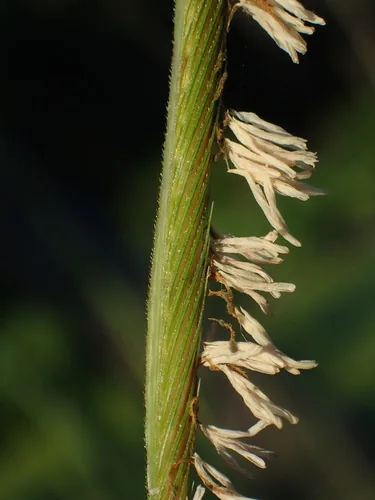
Prairie cordgrass (Spartina pectinata) is a robust rhizomatous grass of North American wetlands, wet prairies, and rain-garden bottoms, forming tall clumps with narrow leaves and airy flowering panicles in summer. Culms often reach 4–7 feet (1.2–2.1 m), spreading by rhizomes into soil-stabilizing colonies where moisture is reliable. It is not the coastal saltmarsh Spartina complex—this is the inland workhorse for biofiltration, bank binding, and habitat structure in freshwater contexts. Full sun for strongest stems and dense stands; partial shade reduces vigor. Moist to wet soils with some organic matter mimic native sites; tolerates seasonal flooding and short dry downs once established. Avoid planting in dry xeric berms without irrigation—it will simply leave. Divide rhizomes in early spring before growth surges; keep divisions moist until replanted. Sow seed with consistent moisture and warmth; establishment from seed is slower than vegetative chunks. Cut back dead material in late winter to clear space for new culms. Cut stems for mulch or weaving crafts after seeds mature if local regulations allow—avoid removing entire stands from public land. Peak biomass tracks warm wet months. Leave standing stems over winter for cover unless fire codes or aesthetics demand otherwise.
Permaculture Functions
- Erosion Control: Spartina pectinata rhizomes armor freshwater pond margins, rain-garden bottoms, and bioswale toes where wave action from pipe outfalls would scour bare clay -- edge with buried liner on tiny lots because rhizomes explore aggressively.
- Wildlife Attractor: Seeds feed swamp sparrows and rails; dense stems hide frog metamorphs and damselfly oviposition sites -- pair with pickerelweed at the water interface for vertical structure niches.
- Water Retention: Tall culms slow sheet flow and drop silt during storm peaks, extending hydroperiod a few critical days for wetland herbs downstream -- harvest some winter biomass so stands do not choke flow entirely.
- Biomass: Carbon-heavy straw chips into acidic mulch for blueberry rows or hugel cores beside wet zones -- avoid spreading rhizome fragments uphill into dry beds unless you enjoy surprise cordgrass colonies.
Companion Planting
- Rhizome vigor — can expand beyond tiny formal beds without edging or containers
- Salt exposure — not a coastal saltmarsh specialist; chronic salinity selects different Spartina species
Threats & Pressure