About
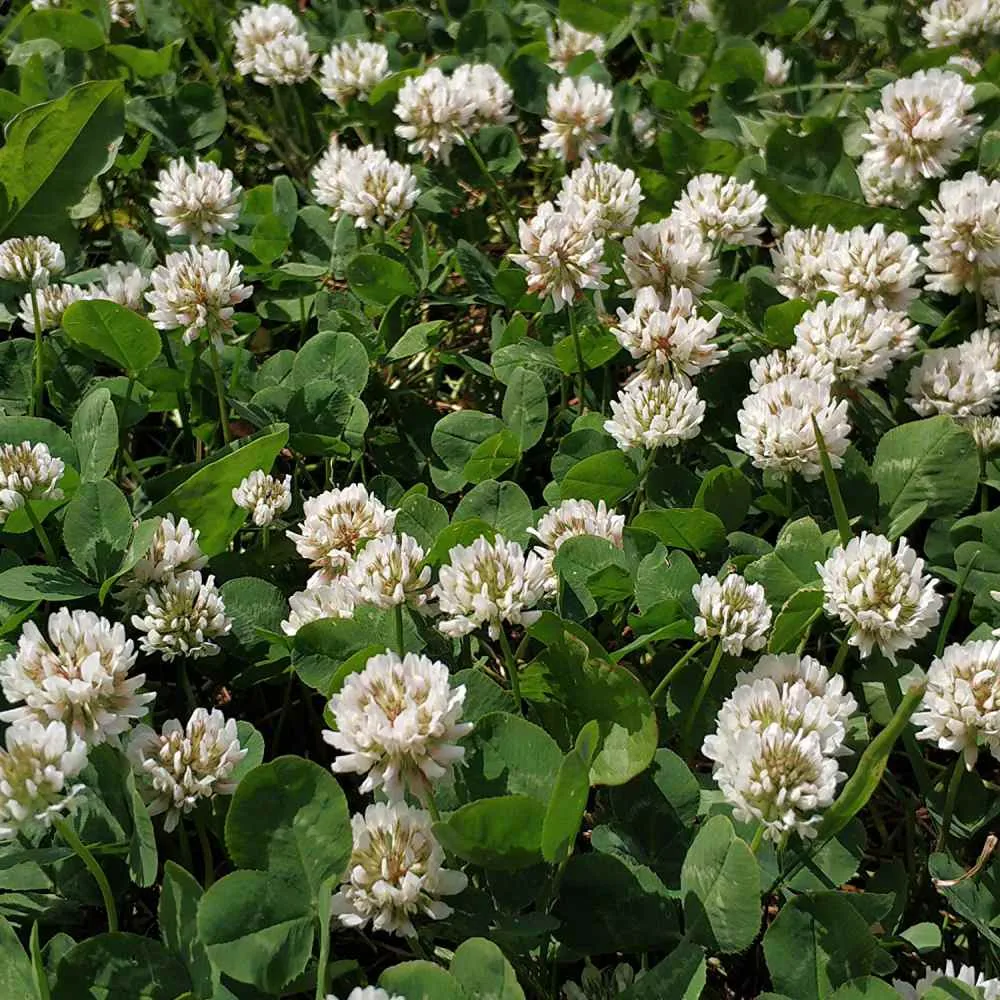
Dutch Clover (Trifolium repens) is a low-growing, creeping perennial that spreads through stolons, forming dense mats. It has trifoliate green leaves and produces small white or pinkish flowers that attract bees and other pollinators. It is highly adaptable and commonly used as a cover crop, living mulch, and ground cover in orchards and gardens. This clover is valued for its nitrogen-fixing abilities, improving soil fertility while suppressing weeds. It thrives in well-drained, moderately fertile soils and is drought-tolerant once established. Dutch Clover is also used as forage for livestock. Prefers full sun to partial shade. Thrives in moist, well-drained soil but tolerates poor conditions. Drought-resistant once established, but regular watering promotes lush growth. Seeds: Direct sow in early spring or fall for best germination. Self-seeding: Readily reseeds itself if allowed to flower. Stolons: Spreads naturally by creeping stems that root at nodes. Can be cut throughout the growing season for mulch or animal fodder. Flowers can be harvested when fully open for medicinal or culinary uses. Grazing animals can forage year-round in suitable climates.
Permaculture Functions
- Nitrogen Fixer: Ladino-type Trifolium repens selections nodulate heavily along stolons and release root exudates that prime soil biology under apple drip lines -- inoculate seed the first year so nodules form before you judge stand failure.
- Pollinator: White to pinkish heads sit low enough for ground-nesting bees yet high enough for honeybees on warm afternoons -- bloom overlaps early stone fruit pollination gaps in cool springs.
- Wildlife Attractor: Clover mats host caterpillars and spiders that feed insectivorous birds at orchard floor height -- mowing alternate rows leaves refuges while you still keep tractor alleys tidy.
- Mulcher: Frequent light mowing throws nitrogen-rich clippings sideways into vegetable paths where they wilt to a thin film in days -- unlike tall grass, residue rarely smothers low strawberry crowns if you keep blades high.
- Dynamic Accumulator: Tissue tests show elevated phosphorus and calcium pulled into leaflets from shallow subsoil -- when you strip excess runners into compost, those minerals ride with the green fraction instead of leaching past root depth.
- Erosion Control: Nodes root along runners across swale berms where intermittent flooding would scour annual seedings -- stolons reroot after short inundation that kills upright clovers.
- Animal Fodder: Dairy rotations graze ladino hard in spring flush for crude protein north of twenty percent -- poultry yards benefit from self-harvested leaves if you accept some bare patches under heavy scratching.
- Border Plant: Low edge along fence lines marks dog runs and chicken moats without blocking sight lines -- dense enough to exclude creeping Bermuda from beds if you maintain a twelve-inch mow strip toward the invader side.
- Ground Cover: Mat height under eight inches slips under young grapevines or high-bush blueberry skirts -- stolons bridge mulch gaps so weeds never see bare photoperiod after rain events.
Companion Planting
No companion data yet.
Also mentioned as companions:
- Pear
- Cherry
- Grape
- Apple
- Tomato
Not yet profiled in PermiePortal
- Onion
- Garlic
Threats & Pressure
- Aphids
- Banded Cucumber Beetle
- Bean Aphid
- Bean Leaf Beetle
- Bean Weevil
- Corn Earworm
- Cowpea Curculio
- Fall Armyworm
- Kudzu Bug
- Locust Borer
- Locust Leaf Miner
- Lubber Grasshopper
- Pea Moth
- Pea Weevil
- Reniform Nematode
- Root Aphid
- Soybean Looper
- Spittlebugs
- Stink Bug
- Striped Cucumber Beetle
- Spotted Cucumber Beetle
- Brown Marmorated Stink Bug
- Harlequin Ladybird
- Velvetbean Caterpillar