About
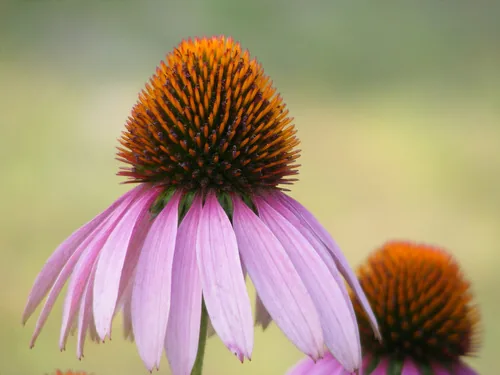
Echinacea (Echinacea purpurea) is a hardy perennial herbaceous plant known for its striking purple-pink daisy-like flowers with spiky, cone-shaped centers. It grows up to 90 cm (3 feet) tall, with dark green, lance-shaped leaves. The plant is widely used for its medicinal benefits and as an ornamental flower in gardens. Echinacea is drought-tolerant and thrives in well-drained, sandy, or loamy soils. It attracts pollinators such as bees, butterflies, and hummingbirds and is commonly grown in medicinal gardens, prairie restorations, and food forests. Prefers full sun but tolerates partial shade. Requires well-drained soil; does well in sandy or loamy conditions. Drought-tolerant once established but benefits from occasional deep watering. Seeds: Direct sow in fall or cold stratify before planting in spring for better germination. Division: Established plants can be divided every 3–4 years in early spring. Cuttings: Root cuttings can be used to propagate new plants. Flowers should be harvested when fully open for fresh use or drying. Leaves can be harvested anytime during the growing season. Roots are harvested in the plant’s second or third year for medicinal preparations.
Permaculture Functions
- Edible: Petals pull off the cone disk for summer salads; roots stay bitter and are not a casual food like the petals -- reserve root harvest for intentional preparation after second or third year growth.
- Medicinal: Alkamide-rich root and fresh flowering tops are traditional at first tickle of cold season -- autoimmune conditions and certain medications conflict; verify with a clinician before daily winter use.
- Pollinator: Drooping magenta rays leave the spiny cone fully exposed for long-tongued bees and butterflies to land and walk -- feeding steadily through humid August afternoons.
- Wildlife Attractor: Goldfinches cling to stiff winter cones and pick seeds after frost -- while stalks still stand above snow line in prairie-style plantings.
- Mulcher: Second-year stems cut in spring compost quickly when chipped with mower -- coarse hollow pith needs mixing with nitrogen greens so passive piles do not leave dry pockets that refuse to heat.
- Dynamic Accumulator: Second- and third-year taproots lift calcium and magnesium into leaf tissue measurable in lab ash compared with shallow turf plugs from the same soil series -- chop senesced leaves into compost if you are not saving every cone for birds.
- Border Plant: Drifts along driveway sun give vertical rhythm between lower catmint and taller rudbeckia without hiding sight lines -- for winter snow removal stakes.
Companion Planting
Also mentioned as companions:
- Coneflower
Not yet profiled in PermiePortal
- None known
Threats & Pressure