About
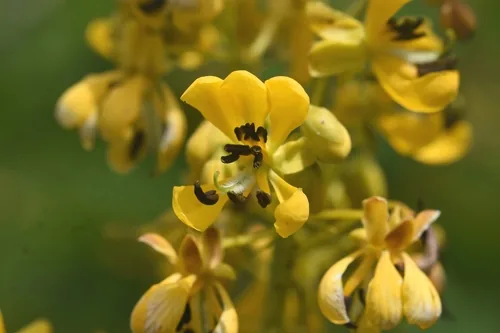
Wild senna (Senna marilandica) is an upright herbaceous perennial legume of moist prairies, woodland edges, and roadsides across the eastern and central United States. Bright yellow summer flowers give way to long pods; compound leaves close at night. Sulphur butterflies use many Senna species as larval hosts, making this a functional bridge between nitrogen fixation and pollinator habitat. Full sun for sturdiest stems and heaviest bloom; tolerates light shade with fewer flowers. Average to moist soils preferred; tolerates short drought once established but looks best with even moisture. Airflow reduces foliar disease in humid summers. Scarify seed and sow after last frost; warm soil speeds germination. Transplant young plants in cool wet weather. Cut back dead stems in late winter to tidy clumps and reduce overwintering disease. Pods and seeds contain compounds used cautiously as herbal laxatives—expert guidance required; not casual kitchen use. Leave flowers and foliage for sulphur caterpillars during flight periods.
Permaculture Functions
- Nitrogen Fixer: Senna marilandica nodulates with compatible rhizobia -- cut standing stems to recycle fixed N without shade battles.
- Pollinator: Bright yellow cassia flowers feed bumblebees -- foliage hosts Phoebis sulphur caterpillars; holes mean you succeeded.
- Wildlife Attractor: Long brown pods rattle seed for sparrows late winter -- leave stems if you want finch percussion.
- Ornamental: Upright 3--5 ft wands fit rain-garden shoulders -- moist sun keeps stems stiff; shade makes them flop.
Companion Planting
Also mentioned as companions:
- Ironweed
Not yet profiled in PermiePortal
- Laxative chemistry — seeds are not snack food; keep away from curious children and pets
- Deer browsing — young plants may need cages until woody bases develop
Threats & Pressure
- Aphids
- Banded Cucumber Beetle
- Bean Aphid
- Bean Leaf Beetle
- Bean Weevil
- Corn Earworm
- Cowpea Curculio
- Fall Armyworm
- Japanese Beetles
- Kudzu Bug
- Locust Borer
- Locust Leaf Miner
- Lubber Grasshopper
- Pea Moth
- Pea Weevil
- Reniform Nematode
- Root Aphid
- Soybean Looper
- Spittlebugs
- Stink Bug
- Striped Cucumber Beetle
- Spotted Cucumber Beetle
- Brown Marmorated Stink Bug
- Harlequin Ladybird
- Velvetbean Caterpillar