About
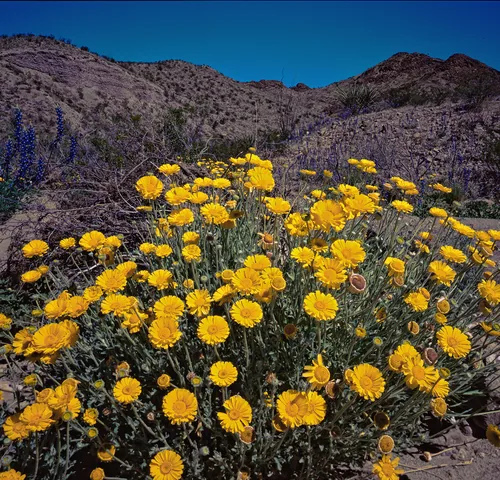
Desert marigold (*Baileya multiradiata*) is a short-lived perennial or self-seeding subshrub from the southwestern deserts, forming low mounds of woolly gray foliage topped with bright yellow daisy flowers for much of the warm season. Plants are usually under 18 inches tall and spread in loose clumps. It is grown in subtropical and tropical Americas mainly in rock gardens, berms, and pollinator strips where drainage is sharp and humidity around the crown stays moderate. Give full sun and excellent drainage; avoid heavy irrigation and wet nights, which promote rot in humid subtropical and tropical gardens. A quick soak then dry-down mimics desert storms better than daily sprinkles. Seeds: Sow on the surface of sandy mix in warmth; light helps germination. Thin or transplant while small. Division: Lift and split modest clumps in early warm weather if the crown is not woody; replant immediately into dryish soil. Pick flowers at midday on dry days for longest vase life. For seed saving, wait until heads are crisp and straw-colored before collecting. Deadheading can extend bloom but reduces self-sowing; leave late flowers if you want a naturalized drift.
Permaculture Functions
- Ornamental: Baileya multiradiata woolly gray mounds carry bright yellow daisies for months in xeric borders -- high contrast against succulents and gravel.
- Pollinator: Many small disc and ray florets feed native bees and butterflies -- reliable during warm dry periods when moisture-dependent flowers have closed.
- Ground Cover: Low mounds under 18 inches spread in loose clumps, covering mineral soil -- between larger desert shrubs.
- Erosion Control: Fibrous roots knit sandy berms -- while felted leaves reduce raindrop impact on bare slopes.
- Wildlife Attractor: Mature seed heads feed finches and sparrows -- delay deadheading into cool weather to maximize seed availability.
Companion Planting
Threats & Pressure