About
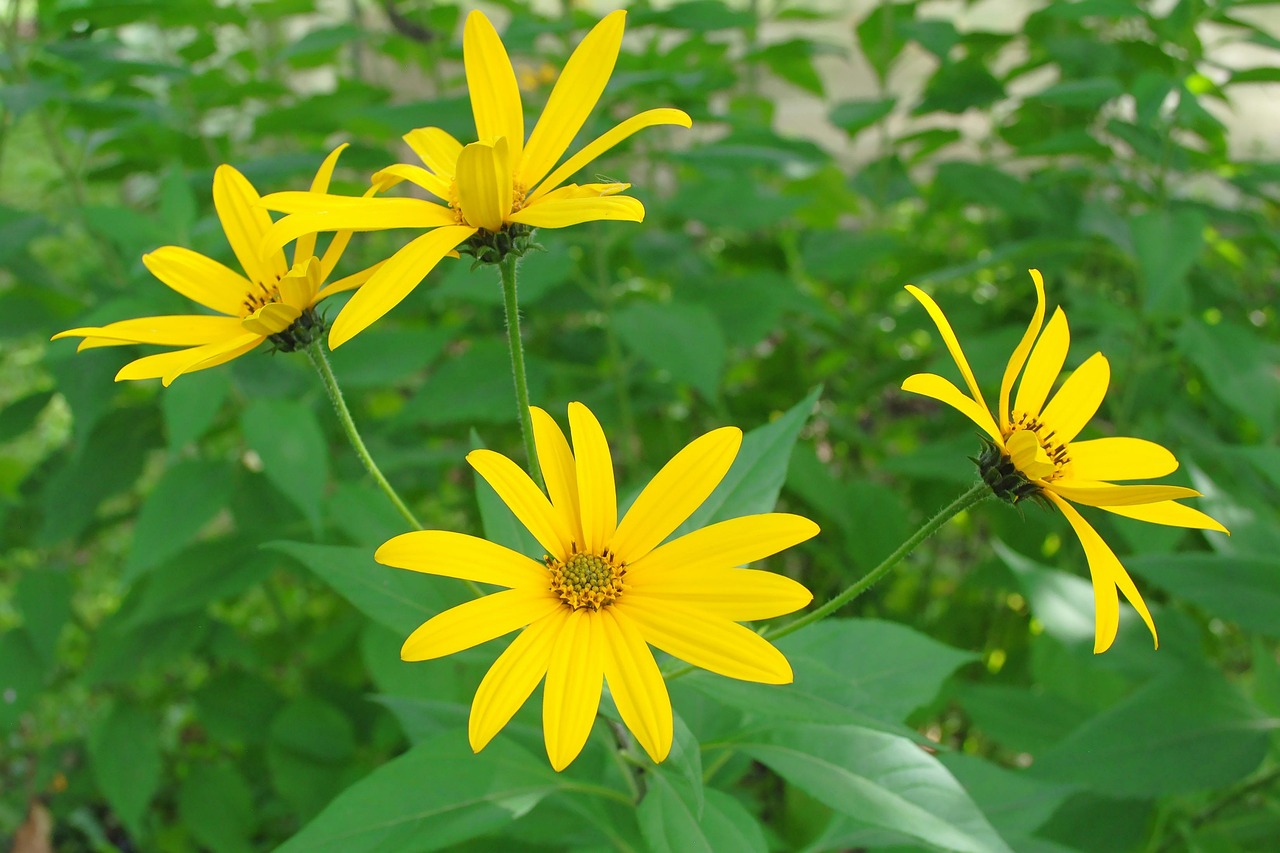
Sunchokes are tall, herbaceous perennials that can reach heights between 6 to 10 feet (1.8 to 3 meters). They have sturdy, branching stems with large, rough-textured leaves. In late summer to early fall, they produce yellow, sunflower-like blooms. The edible tubers are knobby and resemble ginger roots, varying in color from pale brown to white, red, or purple. Sunchokes are known for their vigorous growth and can become invasive if not managed properly. 🌞💧 **Sun and Water Requirements:** Sunchokes grow best in full sun but can tolerate partial shade. They prefer average, well-drained soils with consistent moisture. Mulching can help conserve soil moisture. While they are drought-tolerant once established, regular watering promotes better tuber yields. ✂️🫘 **Methods to Propagate:** Sunchokes are primarily propagated by planting tubers. Each tuber or tuber section with at least one eye can sprout into a new plant. Plant tubers 3 to 5 inches (7.6 to 12.7 centimeters) deep and about 12 to 18 inches (30 to 45 centimeters) apart in the spring after the danger of frost has passed. 🧑🌾👩🌾 **When to Harvest:** Tubers are typically ready for harvest in late fall, after the foliage has been killed by frost. They can be left in the ground and dug up as needed throughout the winter, as long as the soil is not frozen. Tubers left in the ground will sprout new plants in the following growing season.
Permaculture Functions
- **Edible: ** The tubers are rich in inulin and can be eaten raw, roasted, sautéed, or used in soups and stews, offering a nutty, slightly sweet flavor.
- **Biofuel: ** Sunchokes have been explored as a source of bioethanol due to their high biomass and carbohydrate content.
- **Wildlife Attractor: ** The flowers attract pollinators like bees and butterflies, while the tubers can be a food source for certain wildlife.
- **Erosion Control: ** Their extensive root systems help stabilize soil, making them useful in preventing erosion on slopes and disturbed lands.
Practitioner Notes
- Overfertilized fast growth dilutes flavor and invites sap feeders—lean soil often tastes more like itself.
- Watch the plant’s own signals first—catalog zone numbers do not replace your site’s microclimate truth.
- Morning picks hold turgor; afternoon heat steals shelf life even if the cooler feels honest.
- Sharp tools and clean cuts beat torn stems; disease spores love frayed tissue more than rhetoric.
Companion Planting
- Corn
- Beans
- Squash
- Potato
- Tomato
- Pepper
Pest Pressure