About
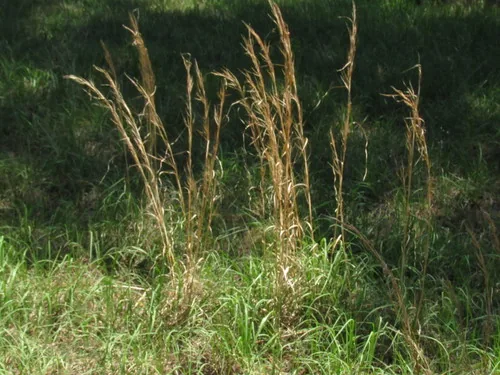
Broomsedge bluestem (Andropogon virginicus) is a warm-season bunchgrass native to the Americas, recognizable by tufted clumps and coppery winter stems that catch low sun like forgotten brooms. It colonizes old fields, roadsides, and pine savannas, typically 2–4 feet (0.6–1.2 m) tall. Outside its native range it behaves as an invasive pasture weed in some Pacific and other regions—verify local status before romanticizing it. Where native, it is a cheap biomass and wildlife structure plant that laughs at low fertility. Full sun; shade weakens tussocks. Thrives on lean, well-drained soils; high nitrogen and heavy grazing favor it over preferred forages—soil fertility management changes outcomes. Tolerates drought; dislikes permanent inundation. Sow seed on warm bare soil; needs light for germination. Clumps expand slowly; division possible in early spring for restoration plugs. Prescribed fire or mowing on appropriate schedules can renew stands where regulations allow. For forage, graze early while quality is higher; mature stands are filler fiber. For mulch, cut after seed set only if you accept volunteer spread—timing is an ecological vote.
Permaculture Functions
- Biomass: Andropogon virginicus stems stay stiff copper through winter -- giving carbon-dense mulch bales off old fields when you cut before spring green-up if local weed rules allow.
- Wildlife Attractor: Song sparrows and field mice use clump bases for cover -- while goldfinches shake seed from bleached panicles in February.
- Erosion Control: Fibrous roots grid old-field mineral soil until slower shrubs arrive, useful on pipeline rights-of-way -- where you need quick hold.
- Ornamental: Low sun lights each tassel like wire brush against snow, a graphic marker on berms -- where you refuse dyed mulch.
- Animal Fodder: Cattle graze young growth in April -- while protein stays high, then refuse stems once lignin spikes in June heat.
Companion Planting
- Invasive risk outside native range — check regional weed lists before planting or spreading seed
- Low grazing quality at maturity — rotation timing matters for livestock outcomes
Threats & Pressure