About
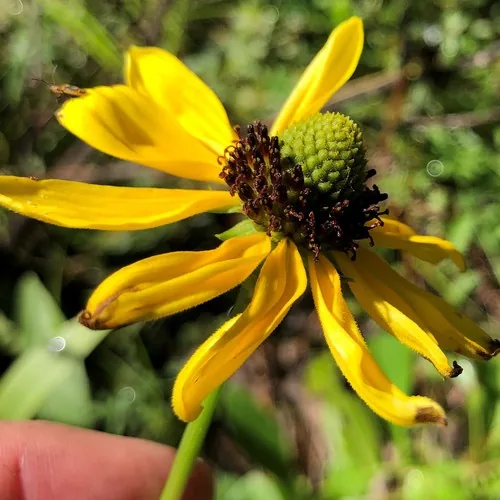
Shining coneflower (Rudbeckia nitida) is a robust perennial of moist prairies and wet meadows, with glossy leaves and bright yellow ray flowers around a tall greenish central cone on stems reaching 3–6 feet (0.9–1.8 m). It tolerates clay and seasonal wetness better than many dry-land rudbeckias, making it valuable in rain gardens, pond margins, and sunny swales. Late-season bloom feeds pollinators when earlier flowers retire. Full sun for stiff stems and dense bloom; light shade reduces flower count. Moist to average soils suit it; tolerates short dry downs once established but looks freshest with steady moisture. Mulch to keep roots cool; avoid stagnant water over crowns in humid heat. Divide clumps in spring; sow seed with cold stratification or direct-sow in fall. Cut back dead stems in late winter if tidy gardens matter. Cut flowers when rays are fully open for bouquets. Leave seed heads for finches. Peak bloom tracks late warm season.
Permaculture Functions
- Pollinator: Rudbeckia nitida stiff green cones and drooping yellow rays drip nectar late summer -- when earlier composites are browned out on moist prairie reconstructions.
- Wildlife Attractor: Cone seeds feed goldfinches -- while hollow stems shelter overwintering solitary bees if you postpone aggressive cleanup.
- Ornamental: Waxy lance leaves stay glossy through humidity where softer forbs mildew -- reads intentional in rain garden berms.
- Erosion Control: Fibrous crowns grip pond shelves and bioswale sides -- holds against sheet flow from pavement upslope where turf fails.
Companion Planting
- Droughty sand without irrigation — smaller plants and fewer flowers
- Overcrowding — mildew risk if air cannot move between dense stems
Threats & Pressure