About
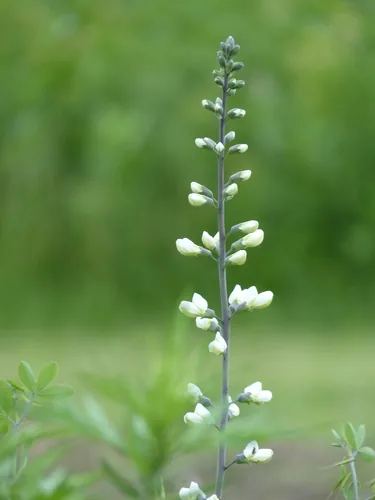
False indigo (Baptisia australis) is a long-lived leguminous perennial of prairies, open woods, and roadsides in eastern and central North America, forming shrub-like clumps of blue-green trifoliate leaves and tall spikes of indigo-blue pea flowers followed by inflated pods. It fixes atmospheric nitrogen via root nodules, feeds long-tongued bees, and laughs at drought once the taproot finds depth—after a sulky first year that tests beginner patience. Use it as a structural herb in rain gardens, meadow edges, and fruit-tree understories where you want fertility without pretending clover is the only legume. Full sun for strongest bloom and upright habit; lean in part shade. Prefers well-drained soils; tolerates drought and lean ground after establishment. Wet feet in winter rots crowns—raise beds or choose wet-tolerant species for swamp cosplay. Cold-hardy through northern temperate winters; heat-tolerant with deep soil moisture access. Scarify seeds and soak overnight; germination improves with warm stratification cycles. Divide large crowns carefully in early spring—roots resent casual slicing. Cut spent flower stalks for arrangements before pods fully mature if you dislike self-sowing. Leave some pods for rattling winter interest and local seed fall. Chop-and-drop leaves after frost as mulch around neighboring plants.
Permaculture Functions
- Nitrogen Fixer: Baptisia australis rhizobia on woody crowns slowly raise available nitrogen in lean prairie soils -- pair with shallow-rooted forbs so you are not double-mining the same taproot horizon every chop cycle.
- Pollinator: Indigo racemes shaped for long tongues keep carpenter and bumble bees busy for two weeks in June -- when clover rows sit between bloom flushes on zone 3-9 meadow edges.
- Ornamental: Glaucous trifoliate mounds read shrubby before spikes rise, and inflated black pods rattle into winter -- for designers who skip tidy shear addiction on formal perennial borders.
- Dynamic Accumulator: Carrot-yellow taproot pulls calcium into autumn leaf litter you drop on berms after frost kills tops -- feeding fruiting shrubs with fibrous feeder roots under the same sun exposure.
- Border Plant: Three-foot basal clumps anchor sunny rain-garden berms without flopping like overspun asters -- when drainage stays sharp through wet winter crowns.
Companion Planting
Also mentioned as companions:
- Coneflower
Not yet profiled in PermiePortal
- Transplanting mature taprooted clumps often fails—site young plants where they can age in place
Threats & Pressure
- Aphids
- Banded Cucumber Beetle
- Bean Aphid
- Bean Leaf Beetle
- Bean Weevil
- Corn Earworm
- Cowpea Curculio
- Fall Armyworm
- Kudzu Bug
- Leafhoppers
- Locust Borer
- Locust Leaf Miner
- Lubber Grasshopper
- Pea Moth
- Pea Weevil
- Reniform Nematode
- Root Aphid
- Soybean Looper
- Spittlebugs
- Stink Bug
- Striped Cucumber Beetle
- Spotted Cucumber Beetle
- Brown Marmorated Stink Bug
- Harlequin Ladybird
- Velvetbean Caterpillar