About
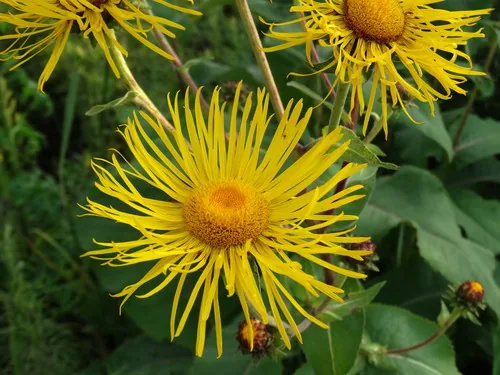
Elecampane (*Inula helenium*) is a robust perennial herb from Eurasia, naturalized in parts of North America, with large basal leaves and towering yellow daisy flowers on stems that can exceed 6 feet. Roots are thick, aromatic, and long used in herbal traditions. In subtropical and tropical Americas it is a specialty plant for morning sun, rich soil, and steady moisture—expect shorter stature and possible mildew if air circulation is poor in the wet season. Full sun to bright partial shade. Keep soil evenly moist but not boggy; a deep organic mulch buffers heat. Afternoon shade helps in lowland tropical humidity. Root divisions: Split crowns in early spring or fall; replant pieces with buds facing up. Seeds: Sow fresh seed on the surface, press in, and keep warm and humid; transplant when true leaves appear. Dig roots in fall of the second or third year after growth slows; wash, slice, and dry with good airflow. Flowers can be collected at full yellow disk stage for tinctures or drying if desired.
Permaculture Functions
- Medicinal: Second-year Inula helenium taproot yields inulin-heavy bitters for chest syrups and tinctures -- internal dosing belongs with trained herbalists because Asteraceae cross-reactions and pregnancy cautions are real on concentrated extracts.
- Pollinator: Basketball-sized yellow radiate heads pack disk florets -- that keep bumble bees, longhorn beetles, and butterflies busy from mid through late season on open sunny rows.
- Wildlife Attractor: Upright stalks hold mature achenes for goldfinch flocks -- when you leave a few heads past brown instead of deadheading every stem for tidy cottage aesthetics.
- Dynamic Accumulator: Carrot-class taproot mines subsoil potassium and trace minerals -- that show up in dark basal leaves you chop-and-drop after frost kills six-foot stems in zone 4-9 beds.
- Biomass: Coarse leaves and hollow stems bulk thermal compost piles after flowering -- if you time cuts before humid autumns invite powdery mildew on dense stands.
Threats & Pressure