About
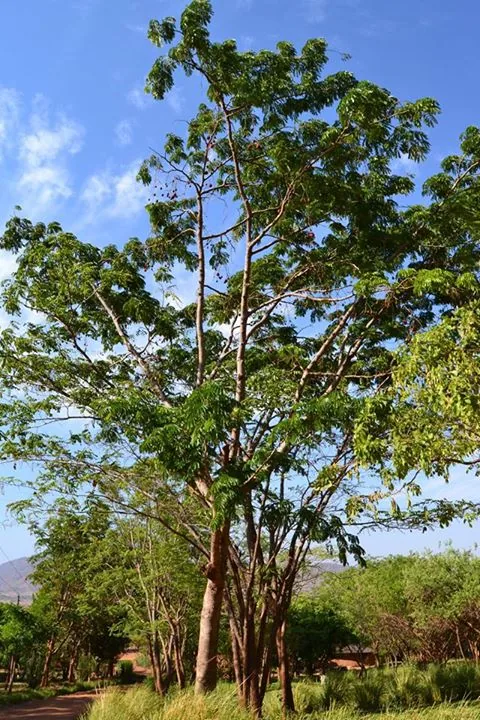
African locust bean (Parkia biglobosa) is a tall, deciduous-in-dry-season legume tree of African savannas and woodlands, famous for pompom-like flower heads and long brown pods holding edible seeds and pungent fermented condiments. Mature trees commonly reach roughly 15–25 m with a spreading crown and bipinnate leaves that cast dappled shade. subtropical and tropical Americas suit it only in the warmest, frost-rare pockets—think tropical and subtropical zones 10b/11 and Puerto Rico lowlands—where dry-season clarity matches its natural rhythm. Humid wet seasons are acceptable with drainage; root rot politics follow soggy clay. Full sun for strong nodulation, flowering, and pod set. Deep, well-drained soil; deep watering when young, then lean toward drought-tolerant management once anchored—avoid continuous wilting in Puerto Rico’s dry season if you want pod production. Seeds: scarify or soak overnight, sow in warm mix; keep heat consistent for uniform emergence. Wildlings or grafted selections where available—preferred if you need known pod chemistry for kitchen use. Gather pods when mature and brown before they disintegrate on the tree if you want clean seed recovery. Seeds and fermented products are the human-use headline; pods also matter for livestock in traditional systems—match harvest to your actual processing tolerance, not Instagram aesthetics.
Permaculture Functions
- Edible: Parkia biglobosa seeds and fermented dawadawa paste carry savory umami that anchors West African soups -- harvest woody pods when they rattle but before they explode, then budget kitchen days because threshing is not a five-minute job.
- Nitrogen Fixer: Bipinnate legume roots nodulate -- leaf fall and spent flowers recycle nitrogen to cassava, sorghum, and pigeon pea understories planted just outside the densest surface roots.
- Animal Fodder: Sweet pulp around seeds feeds cattle and goats in traditional browse systems while pods store through the dry season -- match stocking to shade so animals do not ring-bark young bark while waiting for the next pod drop.
- Shade Provider: High open canopy gives shifting shade to heat-stressed understory without the permanent gloom of dense evergreen jungle -- lift lower limbs for light once pigeon pea and cassava need more sun.
- Mulcher: Fine leaflets drop in flushes after dry-season leaf exchange -- feeds termites and soil fungi that buffer surface temperatures for shallow-rooted companions.
- Wildlife Attractor: Lime pompom inflorescences drip nectar for bees and wasps while long brown pods feed monkeys and large insects -- expect noise and theft if you plant beside quiet seating.
Companion Planting
Threats & Pressure
- Aphids
- Banded Cucumber Beetle
- Bean Aphid
- Bean Leaf Beetle
- Bean Weevil
- Corn Earworm
- Cowpea Curculio
- Fall Armyworm
- Kudzu Bug
- Locust Borer
- Locust Leaf Miner
- Lubber Grasshopper
- Pea Moth
- Pea Weevil
- Reniform Nematode
- Root Aphid
- Scale Insects
- Soybean Looper
- Spittlebugs
- Stink Bug
- Striped Cucumber Beetle
- Spotted Cucumber Beetle
- Brown Marmorated Stink Bug
- Harlequin Ladybird
- Velvetbean Caterpillar