About
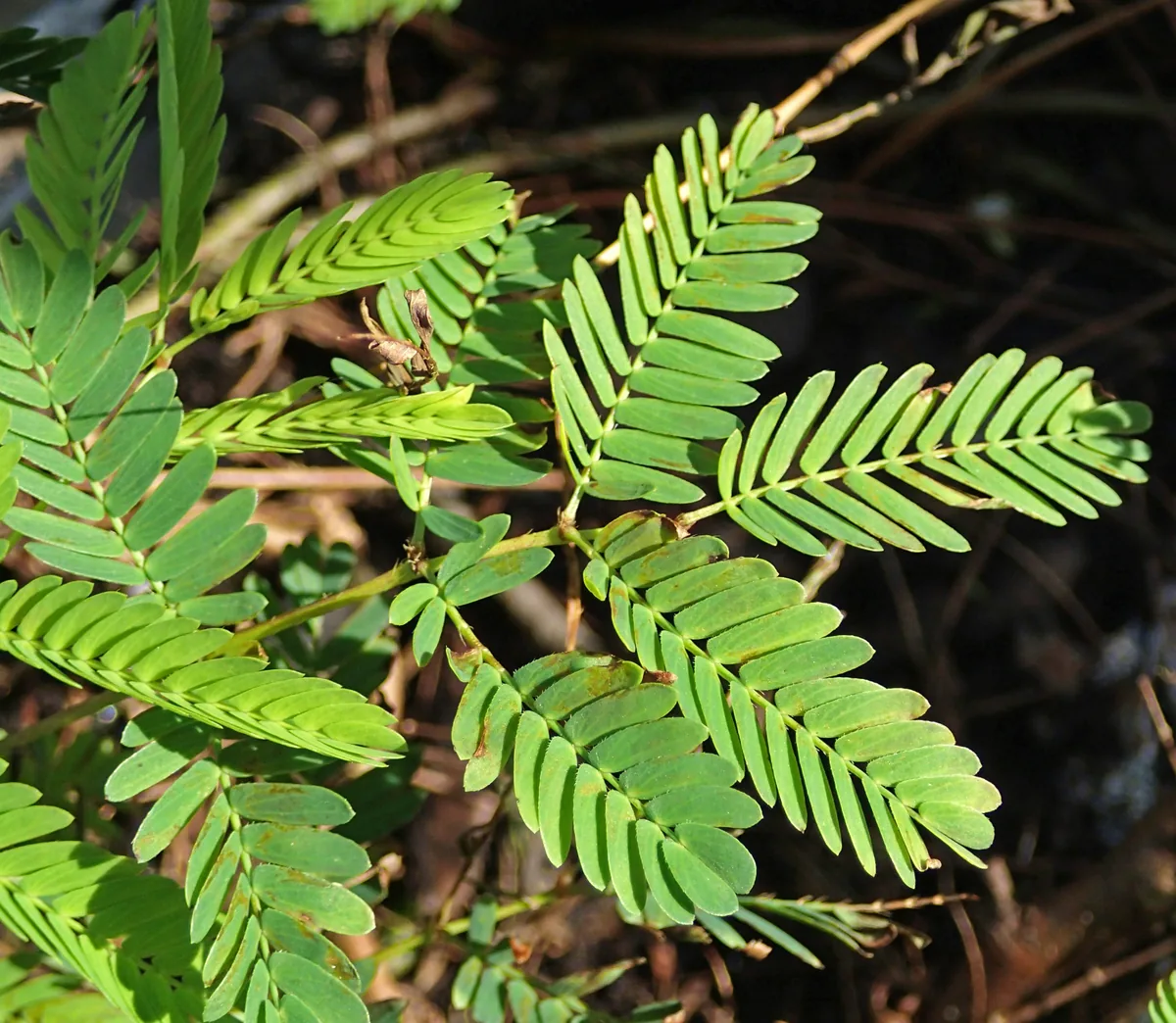
Sunshine mimosa is a native Florida prostrate legume: feathery compound leaves, pink powderpuff flowers, and stems that hug the ground while it quietly fixes nitrogen like a polite anarchist. It handles sun, heat, and occasional wet feet better than a lawn ever will, and laughs at drought once established. Good for slopes, path edges, and anywhere you want living mulch without pretending turfgrass is ecological. Full sun to light shade; blooms heavier with more sun. Any reasonable soil; tolerates poor, sandy Florida dirt and seasonal inundation. Water to establish; afterward it is genuinely low-input compared to fussy exotics. Seed: scarify or pour near-boiling water over seed, soak overnight, then sow warm. Cuttings with a node root easily in moist media. It naturally layers—pinned stems root without a TED talk. Ornamental / ecosystem use: occasional trim to keep it off sidewalks or neighbor aesthetics. Flowers feed pollinators; leave some blooms if you are not a buzzkill.
Permaculture Functions
- Ground Cover: Prostrate Mimosa strigillosa weaves a lawn-height mat that tolerates occasional foot traffic and mower wheels on Florida sand -- where thirsty turf would need daily sprinkler babysitting.
- Erosion Control: Fine roots bind newly cut pond banks and driveway swales through summer wet-dry cycles -- without needing plastic erosion cloth left in place forever.
- Nitrogen Fixer: Rhizobial nodules on creeping stems add slow-release nitrogen to the rhizosphere under citrus and pawpaw -- where you do not want tall pigeon pea shading the trunks.
- Pollinator: Powderpuff pink inflorescences feed small native bees in May through October -- when turfgrass is only shedding pollen to wind, not feeding insects.
- Wildlife Attractor: Low mat gives cover for anoles and ground skinks at the edge of paths where cats cannot pounce from tall grass -- thin edge habitat without inviting rats like deep thatch can.
Field Observations
- No field observations yet
Companion Planting
Threats & Pressure
- Aphids
- Banded Cucumber Beetle
- Bean Aphid
- Bean Leaf Beetle
- Bean Weevil
- Corn Earworm
- Cowpea Curculio
- Fall Armyworm
- Kudzu Bug
- Locust Borer
- Locust Leaf Miner
- Lubber Grasshopper
- Pea Moth
- Pea Weevil
- Reniform Nematode
- Root Aphid
- Scale Insects
- Soybean Looper
- Spider Mites
- Spittlebugs
- Stink Bug
- Striped Cucumber Beetle
- Spotted Cucumber Beetle
- Brown Marmorated Stink Bug
- Harlequin Ladybird
- Velvetbean Caterpillar