About
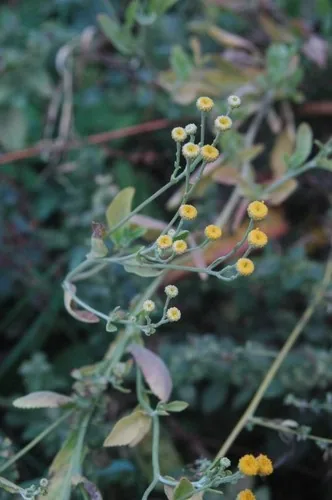
Costmary (*Tanacetum balsamita*) is a clump-forming perennial herb to about 1 m tall with thick, balsam-scented leaves that were once used to mark Bible pages and flavor ale. Leaves are oblong, finely toothed, and slightly resinous; summer brings yellow button flowers in loose clusters. It behaves like a hardy chrysanthemum relative. In subtropical and tropical Americas it may struggle in constant tropical heat—grow in bright shade with rich soil and steady moisture, or treat as a cool-season annual replacement in the hottest lowland sites. Morning sun and afternoon shade in warm climates; full sun only where summers are mild. Even moisture with good drainage; mulch to buffer soil temperature but keep mulch off crowns. Division: Split crowns in early spring or fall; replant immediately. Root cuttings: Take thick roots in dormancy, bury horizontally in moist mix until shoots appear. Gather young leaves before flowering for freshest flavor in teas and flavoring; dry leaves in loose bundles out of direct sun for winter use. Flowers can be trimmed to prolong leaf quality.
Permaculture Functions
- Edible: Balsam-scented Tanacetum balsamita leaves flavor ale, lemonade, and fruit salads in old European kitchen manuscripts -- where bitterness is welcome.
- Medicinal: Bitter tea from leaves enters folk practice as a mild digestive stimulant -- modern use should stay low-dose and pregnancy-aware.
- Ornamental: Crisp oblong leaves and yellow composite buttons give cottage borders a tall aromatic backbone -- holds structure through summer without staking.
- Pest Management: Strong resinous odor can mask brassica cues or repel some chewing insects -- when costmary weaves through mixed vegetable rows.
Companion Planting
Threats & Pressure