About
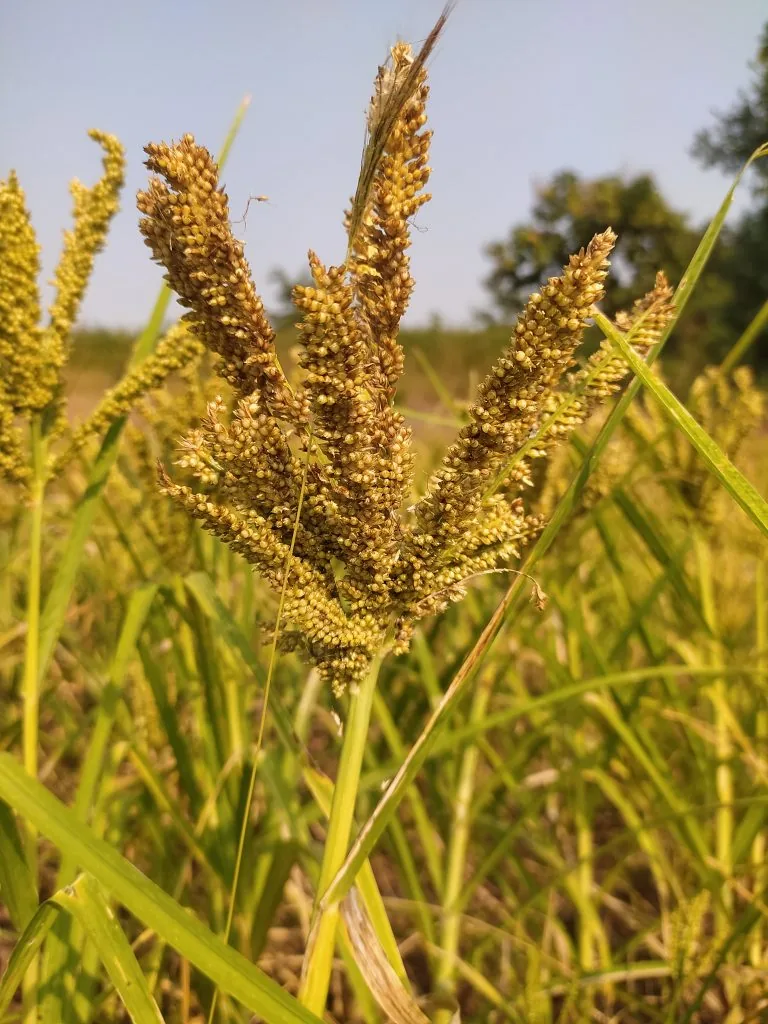
Millet (*Panicum miliaceum*) is a hardy, fast-growing annual grass that reaches heights of 0.5 to 1.5 meters (1.6 to 5 feet). It features slender, erect stems with broad, lanceolate leaves approximately 30 to 50 centimeters (12 to 20 inches) long. The plant produces loose, open panicles bearing small, rounded grains that can vary in color from white and yellow to red and brown. Millet is well-adapted to a range of soil types, including sandy and loamy soils, and is notably drought-resistant, making it suitable for regions with low water availability. Millet is propagated by direct seeding. Sow seeds at a depth of 1.5 to 2.5 centimeters (0.6 to 1 inch) in well-drained soil after the last frost when soil temperatures are consistently above 15°C (59°F). Seeds typically germinate within a week under optimal conditions. Millet thrives in full sun and prefers well-drained, neutral to slightly acidic soils. While it is drought-tolerant once established, consistent moisture during germination and early growth stages promotes optimal development. Avoid waterlogged conditions, as they can impede growth. Harvest millet grains when the seed heads have matured and turned a golden-brown color, typically 60 to 90 days after planting. Cut the stalks and allow them to dry before threshing to separate the grains from the chaff.
Permaculture Functions
- Edible: Panicum miliaceum threshes into small gluten-free grains for porridge, flatbreads, and birdseed blends -- harvest golden-brown panicles before autumn rains sprout seeds on the stalk.
- Animal Fodder: Soft straw and grain suit poultry scratch and ruminant supplement when cut before lignin turns stems into broom handles -- test nitrate issues if drought-stressed forage tempts you.
- Erosion Control: Fibrous annual roots hold disturbed slopes for a single season -- follow with perennials if you want lasting armor, not one-year bandages.
- Ground Cover: Dense sowing smothers weeds and feeds soil life when terminated on schedule -- drill after frost risk passes so warm soil wakes uniform stands.
Companion Planting
- None known
Threats & Pressure