About
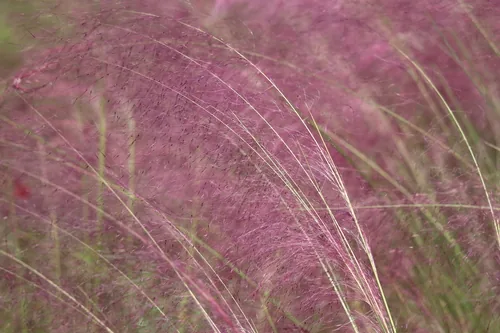
Gulf muhly (Muhlenbergia capillaris) is a warm-season bunchgrass of coastal plain prairies, roadsides, and open pine woodlands in the southeastern United States, famous for airy pink-purple inflorescences that backlight beautifully in autumn sun. Clumps typically reach 2–3 feet (0.6–1 m) with clouds of flowers rising higher. It is a low-input ornamental grass for sunny, well-drained beds and mass plantings in humid subtropical to warm-temperate climates. Full sun for strongest flowering and fall color; too much shade yields green fluff without the blush. Well-drained sandy to loamy soils; tolerates drought after establishment but benefits from occasional deep watering in prolonged dry spells. Avoid constantly wet clay that rots crown tissue. Divide dormant clumps in early spring before new growth accelerates. Sow seed in warm soil; seedlings take time to reach blooming size. Cut back old foliage in late winter before new shoots emerge. Ornamental peak is autumn bloom—plan photography and tours then. Leave standing through winter for structure; cut back before spring flush if neatness matters. Collect seed ethically from restoration-appropriate sources when expanding mixes.
Permaculture Functions
- Ornamental: Muhlenbergia capillaris throws pink-purple airy panicles above fine foliage in autumn -- mass clumps so low sun backlights the inflorescence; singletons read as afterthoughts in big beds.
- Erosion Control: Fibrous bunchgrass roots knit sandy berms and rain-garden shoulders where sheet flow would otherwise strip seed -- it still hates constantly wet clay that rots crowns over winter.
- Wildlife Attractor: Small granivores pick seeds from winter stems while matted bases shelter insects -- leave old growth standing until late winter cutback if you want structure and bird cover through the cool months.
- Border Plant: Tight rows edge paths, parking islands, and bioswale tops without turf irrigation -- shear neighbors that shade the clumps or you get green fluff without the pink cloud.
Companion Planting
- Heavy wet clay — winter crown rot appears as mysterious disappearance
- Deep shade — you get a grass, not a fireworks show
Threats & Pressure