About
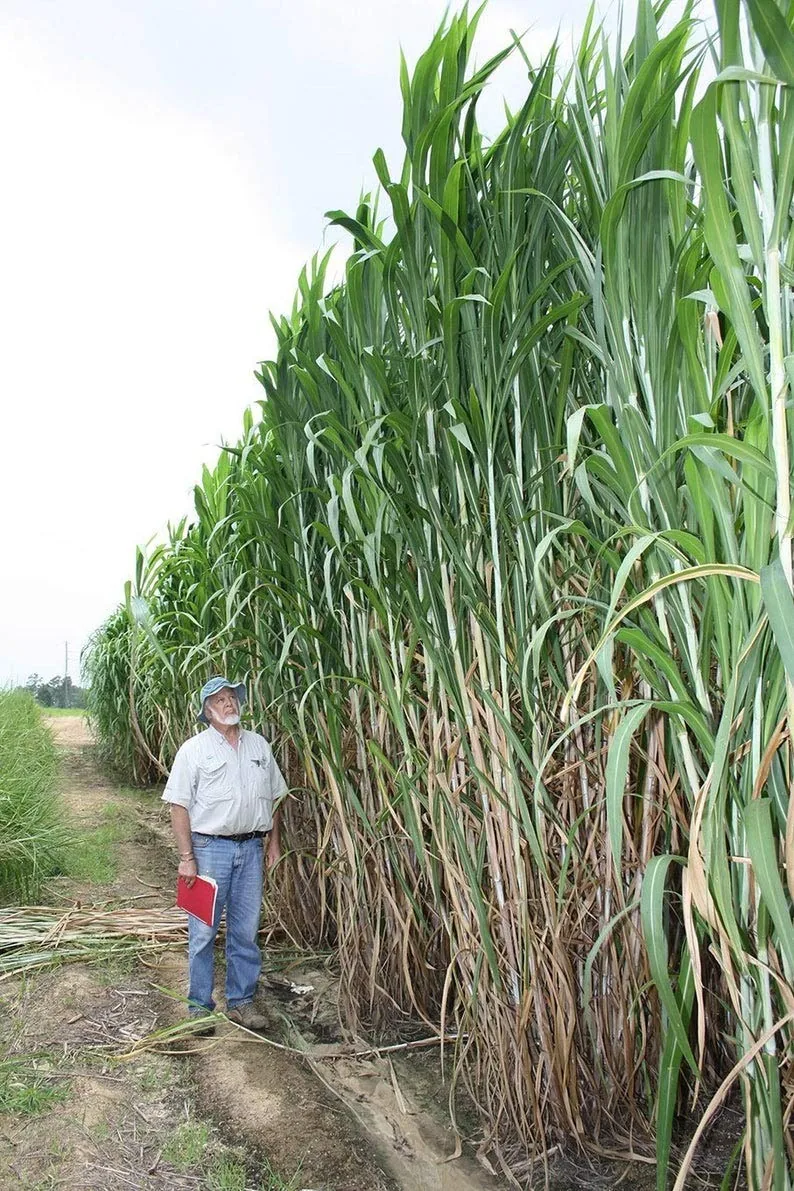
Elephant Grass (*Pennisetum purpureum*) is a robust perennial grass native to tropical and sub-Saharan Africa. It forms dense clumps with tall, bamboo-like stems that can reach heights of 2–3.5 meters, and in some cases up to 7.5 meters. The leaves are long, slender, and mid-green, measuring up to 120 cm in length with a prominent whitish central vein. The plant produces large, bristly flower heads that are typically yellow-brown, though they can also appear greenish or purplish. Elephant Grass thrives in full sun and requires moderate water once established. It is drought-tolerant and can grow in poor, dry soils, making it suitable for a variety of landscapes. Propagation is primarily through stem cuttings or division, as seed production is inconsistent. Cuttings from mature stems can be planted directly into the soil during the growing season. For use as animal fodder, harvest the grass when it reaches about 1–1.5 meters in height to ensure optimal nutritional value. Regular harvesting promotes new growth and maintains the plant's palatability.
Permaculture Functions
- Animal Fodder: Pennisetum purpureum regrowth cut at 1-1.5 meters keeps crude protein and digestibility high for dairy zero-grazing systems -- nutritive value crashes once stems lignify past shoulder height in the same wet season.
- Erosion Control: Stoloniferous crowns knit headwalls on tropical ditch banks -- where maize roots wash out after the same afternoon thunderstorms that barely dent elephant grass clumps.
- Windbreaker: Clumping walls three to seven meters tall break cyclonic gusts across poultry runs and tunnel houses -- when spaced tighter than maize on the windward fence line in zone 8-11.
- Biofuel: Tonnes of cellulose per hectare feed anaerobic digester trials and lignocellulosic ethanol pilots wherever chop-and-haul logistics already exist -- for Napier fodder blocks.
Companion Planting
Also mentioned as companions:
- Cowpea
Not yet profiled in PermiePortal
- None specified
Threats & Pressure