About
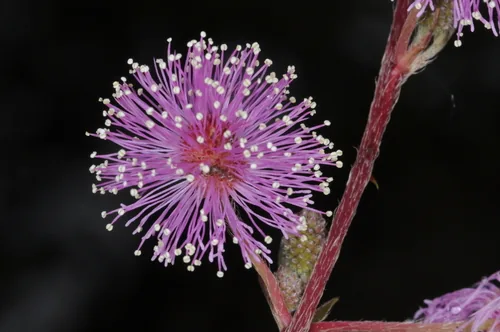
Sensitive plant is the drama queen of the legume world: brush a leaflet and it folds like you insulted its thesis. Low, branching, slightly prickly stems; fluffy pink powder-puff flowers. In subtropical Florida it can self-seed and spread—charming in a pot, potentially rude in a native planting if you let it run wild. Full sun to light shade; leggy shade makes it look even more pathetic (in the botanical sense). Evenly moist, well-drained soil; tolerates brief dry downs but sulks in drought. Seeds: scarify or soak warm water, sow after frost danger; fast in heat. Cuttings: take semi-hardwood tips in warm weather, keep humidity high until rooted. Not a food crop for most people—this entry is about soil, pollinators, and curiosity, not salad.
Permaculture Functions
- Nitrogen Fixer: Mimosa pudica fixes nitrogen through rhizobial nodules while compound leaves collapse at touch -- fold response does not pause soil chemistry underneath.
- Wildlife Attractor: Fluffy pink heads feed solitary bees along greenhouse edges -- where pots stay contained.
- Ornamental: Sensitive leaf motion reads like animation for courtyard pots even though the species self-seeds aggressively outdoors -- in humid tropics.
Companion Planting
Threats & Pressure
- Aphids
- Banded Cucumber Beetle
- Bean Aphid
- Bean Leaf Beetle
- Bean Weevil
- Corn Earworm
- Cowpea Curculio
- Fall Armyworm
- Kudzu Bug
- Locust Borer
- Locust Leaf Miner
- Lubber Grasshopper
- Pea Moth
- Pea Weevil
- Reniform Nematode
- Root Aphid
- Soybean Looper
- Spider Mites
- Spittlebugs
- Stink Bug
- Striped Cucumber Beetle
- Whiteflies
- Spotted Cucumber Beetle
- Brown Marmorated Stink Bug
- Harlequin Ladybird
- Velvetbean Caterpillar