About
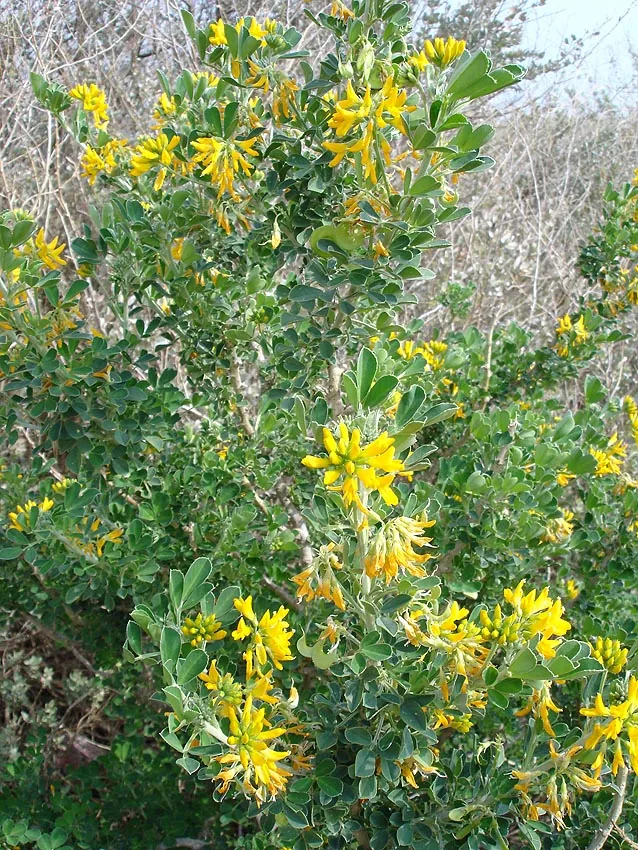
Tree Medick (*Medicago arborea*) is an evergreen shrub native to the Mediterranean Basin, typically growing between 1 to 2 meters (3.3 to 6.6 feet) in height, with some specimens reaching up to 4 meters (13 feet). It features silvery-white stems that are soft to the touch and trifoliate leaves with obovate leaflets. The plant produces clusters of pale yellow flowers from February to April, followed by coiled seed pods. Tree Medick thrives in dry, rocky habitats with calcareous soils and is known for its nitrogen-fixing capabilities, enriching the soil in which it grows. Propagation is typically done through seeds, which should be inoculated with appropriate Rhizobium bacteria to ensure effective nitrogen fixation. Seeds can be sown directly into well-draining soil in a sunny location. Alternatively, propagation can be achieved through semi-hardwood cuttings taken in late summer. Tree Medick requires full sun exposure and prefers well-drained, calcareous soils. It is highly drought-tolerant once established and does not require frequent watering. Overwatering or poorly drained soils can lead to root rot. While not commonly harvested for direct human consumption, Tree Medick can be pruned to provide high-protein forage for livestock, especially during late winter and spring when other forage options may be limited.
Permaculture Functions
- Nitrogen Fixer: Medicago arborea nodulates with rhizobia suited to medics -- inoculate seed with the correct Sinorhizobium group so nodules form on calcareous, droughty ground where annual alfalfa sulks.
- Animal Fodder: Evergreen trifoliate browse yields midwinter protein when Mediterranean pastures look beige -- prune before woodiness climbs if you want dairy-quality leaf.
- Erosion Control: Shrubby 1--4 m frame -- and netted roots hold rocky slopes and road cuts where shallow annual covers wash away in the first storm.
- Ornamental: Silvery pubescent stems and pale yellow February--April flower clusters read as moonlit texture against dark olive backdrops -- plan for occasional thorns on old wood.
Companion Planting
- None reported
Threats & Pressure
- Aphids
- Banded Cucumber Beetle
- Bean Aphid
- Bean Leaf Beetle
- Bean Weevil
- Corn Earworm
- Cowpea Curculio
- Fall Armyworm
- Kudzu Bug
- Locust Borer
- Locust Leaf Miner
- Lubber Grasshopper
- Pea Moth
- Pea Weevil
- Reniform Nematode
- Root Aphid
- Rootknot Nematodes
- Soybean Looper
- Spittlebugs
- Stink Bug
- Striped Cucumber Beetle
- Vegetable Leafminer
- Spotted Cucumber Beetle
- Brown Marmorated Stink Bug
- Harlequin Ladybird
- Velvetbean Caterpillar