About
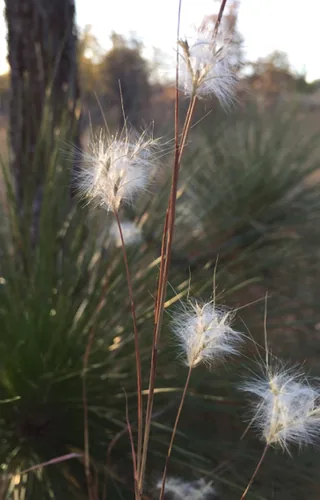
Split beard bluestem (Andropogon ternarius) is a warm-season bunchgrass of southeastern North American dry prairies, sandhills, and roadsides, with blue-green summer foliage turning copper and fluffy white seed tails catching backlight in fall. Stems usually reach 2–4 feet (60–120 cm). It is a fine-textured companion to little bluestem in restoration mixes and a low-input ornamental for lean, sunny beds. Full sun for upright habit and showy seed heads; shade reduces flowering. Well-drained, lean soils suit it; tolerates drought once established. Avoid wet clay; water only to establish. Sow seed in warm soil after frost risk. Divide bunches in spring if needed. Cut back old growth in late winter. Collect seed when tails are dry for restoration. Leave standing for winter structure and birds. Peak color tracks late-summer into fall heat.
Permaculture Functions
- Erosion Control: Andropogon ternarius fibrous roots anchor Gulf Coastal plain cuts -- where sand wants to slide after hard rains.
- Wildlife Attractor: Fluffy white seed flags feed sparrows -- while basal tufts hide skipper larvae through winter dormancy.
- Ornamental: Metallic blue summer blades shift copper -- while seed awns glow against little bluestem companions on dry banks.
- Biomass: Fine stems cut after frost fold into carbon-heavy mulch -- that feeds fungal chains on droughty rooftop soils.
Companion Planting
- Wet clay — poor performance compared with sandhill truth
- Over-irrigation — weeds outcompete lean-grass minimalism
Threats & Pressure