About
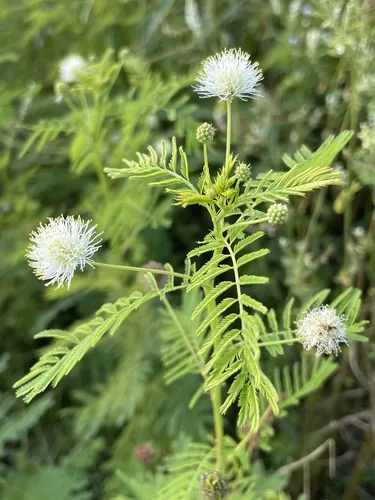
Illinois bundleflower is a deep-rooted native legume of central North American prairies, forming ferny mimosa-like leaves and round white powder-puff flowers in midsummer. Plants reach 2–4 feet, spread by rhizomes into loose colonies, and fix nitrogen while tolerating grazing and drought. In subtropical and tropical Americas use it in sunny savanna edges, orchard alleys, and poultry paddocks where soil drains between downpours—constant bogging rots crowns, while Puerto Rico’s dry season rewards its dormancy strategy if roots are already deep. It is a prairie specialist transplanted into subtropical/tropical rotational systems, not a shade understory filler. Full sun for reliable bloom and nodulation. Well-drained loam to sandy soil; tolerates poor fertility once inoculated with compatible rhizobia. Water to establish; thereafter drought-tolerant but benefits from occasional deep soaking before heavy seed set. Scarify seeds mechanically or with hot water, then sow warm; inoculate with appropriate legume inoculant. Divide rhizomatous clumps during dormancy or early regrowth when soils are workable. Direct seed into prepared beds after last frost risk in marginal zones; in frost-free areas time with onset of warm rains. For hay or mulch, cut before full seed drop if you want to limit self-sowing; leave some pods for self-reseeding guilds. Graze rotationally while plants rebound between bites to protect crowns.
Permaculture Functions
- Nitrogen Fixer: Desmanthus illinoensis hosts rhizobia on deep roots that fix nitrogen into lean prairie soils -- interplant in orchard alleys so leaf litter and nodulated roots feed little bluestem rows without synthetic N.
- Animal Fodder: Ferny foliage runs 15-20 percent crude protein when grazed during vegetative growth -- rotate livestock before crowns fatigue because recovery slows if plants enter drought dormancy stressed.
- Biomass: Tall summer stems produce coarse carbon for chop-and-drop under fruit trees or for compost browns -- mow before hard seed set if you dislike rhizomatous volunteers marching into vegetable beds.
- Pollinator: Cream spherical inflorescences offer pollen and nectar to small bees and skipper butterflies during mid-summer dearth -- bloom sits above foliage where sprays would drift onto understory forbs.
Companion Planting
- Johnsongrass
- Bermudagrass
Threats & Pressure
- Aphids
- Banded Cucumber Beetle
- Bean Aphid
- Bean Leaf Beetle
- Bean Weevil
- Corn Earworm
- Cowpea Curculio
- Fall Armyworm
- Japanese Beetles
- Kudzu Bug
- Locust Borer
- Locust Leaf Miner
- Lubber Grasshopper
- Pea Moth
- Pea Weevil
- Reniform Nematode
- Root Aphid
- Soybean Looper
- Spittlebugs
- Stink Bug
- Striped Cucumber Beetle
- Spotted Cucumber Beetle
- Brown Marmorated Stink Bug
- Harlequin Ladybird
- Velvetbean Caterpillar