About
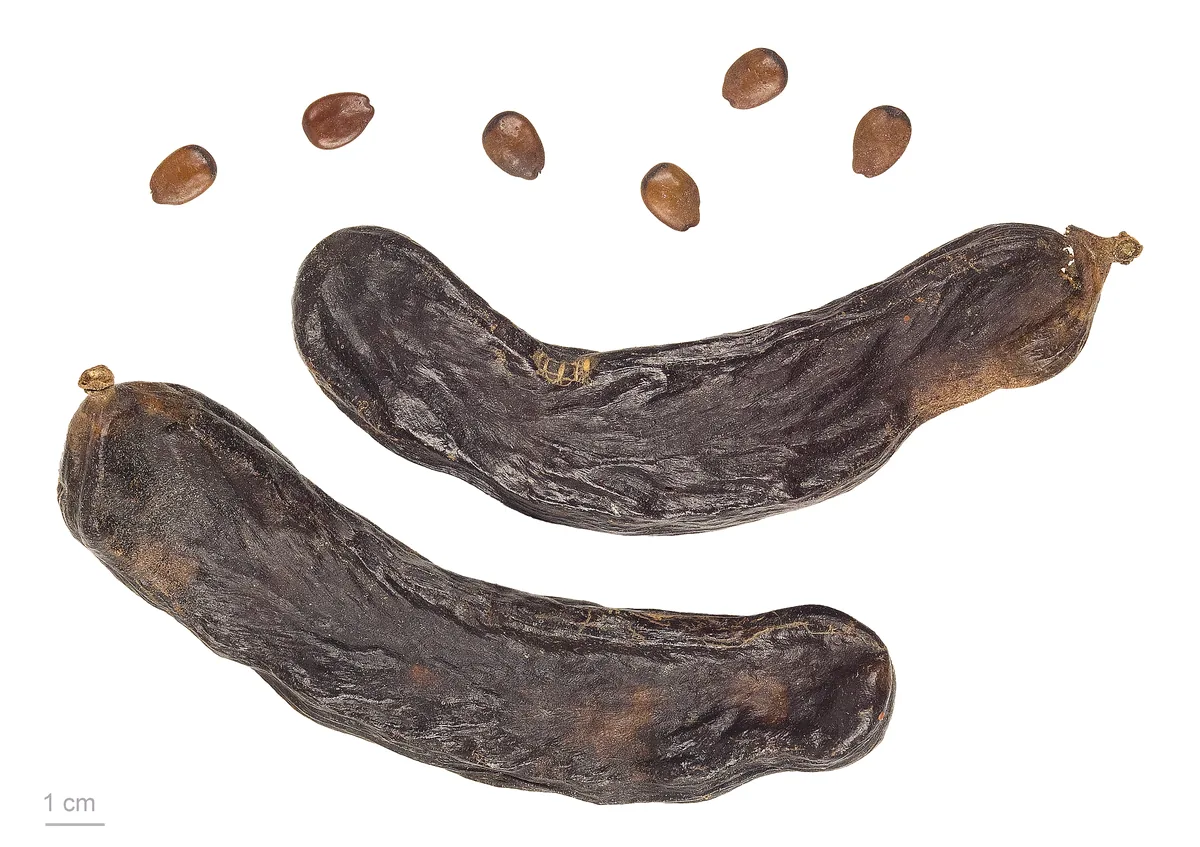
The carob tree (Ceratonia siliqua) is an evergreen Mediterranean legume tree, often 10–15 m (30–50 feet) tall, with glossy compound leaves, small red flowers, and long brown pods that ripen from late summer into winter depending on climate. It is extremely drought-tolerant once established and tolerates poor, rocky soils. Full sun. Deep, well-drained soil; tolerates alkalinity and maritime exposure. In subtropical and tropical Americas, carob handles heat well but demands sharp drainage—raised mounds help during the wet season. Young trees need regular water; mature trees survive on rainfall in dry months once roots are deep. Protect from waterlogging and compaction. Seeds: Scarify and soak; germination can be slow; seedlings variable for pod quality. Grafting: Named, high-sugar pod types are grafted onto seedling understocks for reliable yields. Pick pods when brown and slightly flexible; dry for storage. Carob is roasted for chocolate-like flavor, ground for flour, and used in animal feed; chocolate alternative hype is real but still not chocolate.
Permaculture Functions
- Edible: leathery brown pods roast into chocolatey flour, chew as sweet carob, or ferment -- while seeds supply commercial locust bean gum once pods twist mature on female clones.
- Animal Fodder: pods hit the ground sugar-rich for goats, sheep, and cattle in Mediterranean silvopasture -- where protein hay is expensive but mature trees still need male pollinizers nearby.
- Shade Provider: evergreen compound-leaf canopy casts dry-season shade over lavender, bulbs, and nursery tables along alkaline berms -- where thin soils bake in summer.
- Windbreaker: dense crown trims maritime and inland valley winds -- across hedgerows so tender understory crops lose less leaf water on exposed food-forest edges.
Companion Planting
Threats & Pressure
- Banded Cucumber Beetle
- Bean Aphid
- Bean Leaf Beetle
- Bean Weevil
- Corn Earworm
- Cowpea Curculio
- Fall Armyworm
- Kudzu Bug
- Locust Borer
- Locust Leaf Miner
- Lubber Grasshopper
- Mealybugs
- Pea Moth
- Pea Weevil
- Reniform Nematode
- Root Aphid
- Scale Insects
- Soybean Looper
- Spittlebugs
- Stink Bug
- Striped Cucumber Beetle
- Spotted Cucumber Beetle
- Brown Marmorated Stink Bug
- Harlequin Ladybird
- Velvetbean Caterpillar