About
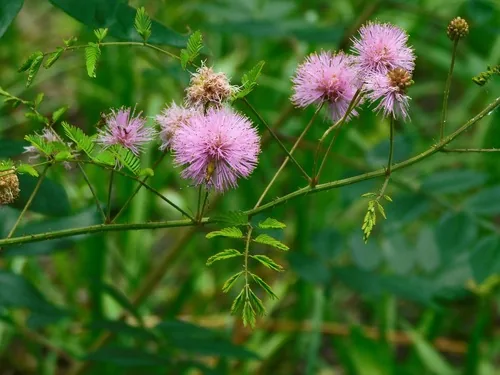
Catclaw sensitive briar (Mimosa quadrivalvis) is a prostrate to low-spreading native legume of warm grasslands and openings in the south-central United States and adjacent regions, bearing pink powderpuff flowers and divided leaves that fold when touched. Curved prickles on stems snag boots and curious mammals, a defense against overgrazing. Plants form mats to low mounds under 1 foot (30 cm) tall but wider across, fixing nitrogen in sunny, dryish soils. Full sun; prefers well-drained, often sandy or rocky soils typical of prairies and savanna edges. Drought-tolerant once established; poor performance in shade or constantly wet muck. Avoid heavy fertilization that favors competing weeds. Scarify seed and sow warm; inoculate with appropriate rhizobia if establishing on sterile soil. Divide crowns carefully—prickles punish rushed handling. Protect young plants from intense rabbit pressure until prickles harden. Grazed lightly by livestock when young before prickles toughen—management intensive. For restoration, collect seed when pods brown and rattle. Mow adjacent weeds before seed set to reduce competition in year one.
Permaculture Functions
- Nitrogen Fixer: roots nodulate with rhizobia to pump modest nitrogen into sandy prairie gaps between bunchgrasses -- when seed is inoculated on sterile fill soils.
- Wildlife Attractor: pink powderpuff inflorescences feed bees -- while dry legume pods rattle seed for quail and other game birds if stands are rested from mowing until maturity.
- Ground Cover: prostrate stems weave under 30 cm mats that fill sun gaps between grasses -- without shading taller warm-season matrix plants once prickles harden.
- Animal Fodder: stays briefly palatable to cattle and sheep before hooked prickles toughen stems -- so rotational grazing must hit early growth flushes or animals self-limit browse.
Companion Planting
- Stem prickles — gloves for planting and weeding; not a barefoot lawn
- Overgrazing — can eliminate sensitive briar patches; rest paddocks to recover
Threats & Pressure
- Aphids
- Banded Cucumber Beetle
- Bean Aphid
- Bean Leaf Beetle
- Bean Weevil
- Corn Earworm
- Cowpea Curculio
- Fall Armyworm
- Japanese Beetles
- Kudzu Bug
- Locust Borer
- Locust Leaf Miner
- Lubber Grasshopper
- Pea Moth
- Pea Weevil
- Reniform Nematode
- Root Aphid
- Soybean Looper
- Spittlebugs
- Stink Bug
- Striped Cucumber Beetle
- Spotted Cucumber Beetle
- Brown Marmorated Stink Bug
- Harlequin Ladybird
- Velvetbean Caterpillar