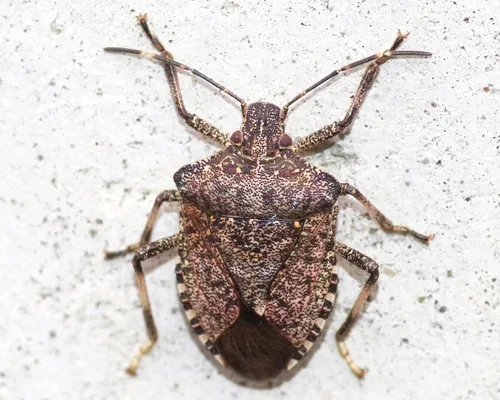
Field Identification
If new growth is curling, yellowing, sticky, or chewed, brown marmorated stink bug may already be on the plant. This pest often builds quietly, then damage appears all at once. Feeding stress weakens growth, reduces yield, and opens the door to secondary disease. Early cleanup is much easier than fighting a full population surge later.
Inspect the newest growth first: leaf undersides, flower buds, stem joints, and tender tips where pests gather. Look for body shape, color, eggs, cast skins, honeydew, webbing, or fresh puncture marks. A hand lens and a white paper tap test help reveal small life stages. Matching visible pests with fresh plant damage confirms active infestation.
Not sure what you have? Use the symptom diagnosis tool →
How to Deal With It
Organic Control Methods
Native egg parasitoid wasps (Trissolcus spp.) attack brown marmorated stink bug eggs and are establishing naturally across the US following the pest's spread. An introduced parasitoid, Trissolcus japonicus, has been released in some regions as a biocontrol agent. Do not spray broad-spectrum pesticides during egg-laying windows — you will kill the parasitoid wasps that are your best long-term defense. Assassin bugs, spiders, and birds prey on nymphs. Diverse flowering plants at garden edges support these predators throughout the season.
BMSB is a true bug that pierces fruit and injects enzymes causing cat-facing and corky spots — damage appears inside fruit before the surface shows it. Monitor with pheromone traps from late spring; rising trap catches signal spray or exclusion timing. Harvest tree fruits promptly when ripe — delayed harvest accumulates stink bug injury. They aggregate on warm south-facing walls in fall before overwintering — seal homes in September before flights begin.
Perimeter trap crops of sunflower, sorghum, or millet concentrate bugs away from high-value plants — destroy or mow trap strips after peak aggregation. Harvest ripe fruit immediately rather than leaving it on the plant. Keep weedy hosts managed along field edges — dock, multiflora rose, and tree of heaven are preferred BMSB hosts. Interplant with strongly scented herbs — garlic, catnip, and lavender at bed edges have some deterrent effect on stink bugs. Shake adults and nymphs into a wide bucket of soapy water during cool mornings when they are sluggish. Fine exclusion netting over individual fruit trees or high tunnel vents reduces egg-laying significantly during peak season. For homes, seal all gaps, cracks, and window frames before fall flights in September. Sticky monitoring traps help time management without replacing hands-on scouting on fruit.
Kaolin clay on fruit and foliage deters feeding and egg-laying — apply every 7 days and after rain, coating all fruit surfaces. Pyrethrin provides quick knockdown but degrades in hours and harms all insects — use only at dusk as a last resort. Neem oil deters feeding when applied consistently but has limited effect on adults already present. Insecticidal soap kills nymphs but bounces off adults. Accept that no spray fully controls BMSB — exclusion and trap cropping are more reliable than chemical management.
Let Nature Handle It
Natural Enemies
- Trissolcus spp. (Platygastridae)
- Arachnid Predators (Spiders)
- Assassin Bugs (Reduviidae)
- Insectivorous Birds
Threat Map