About
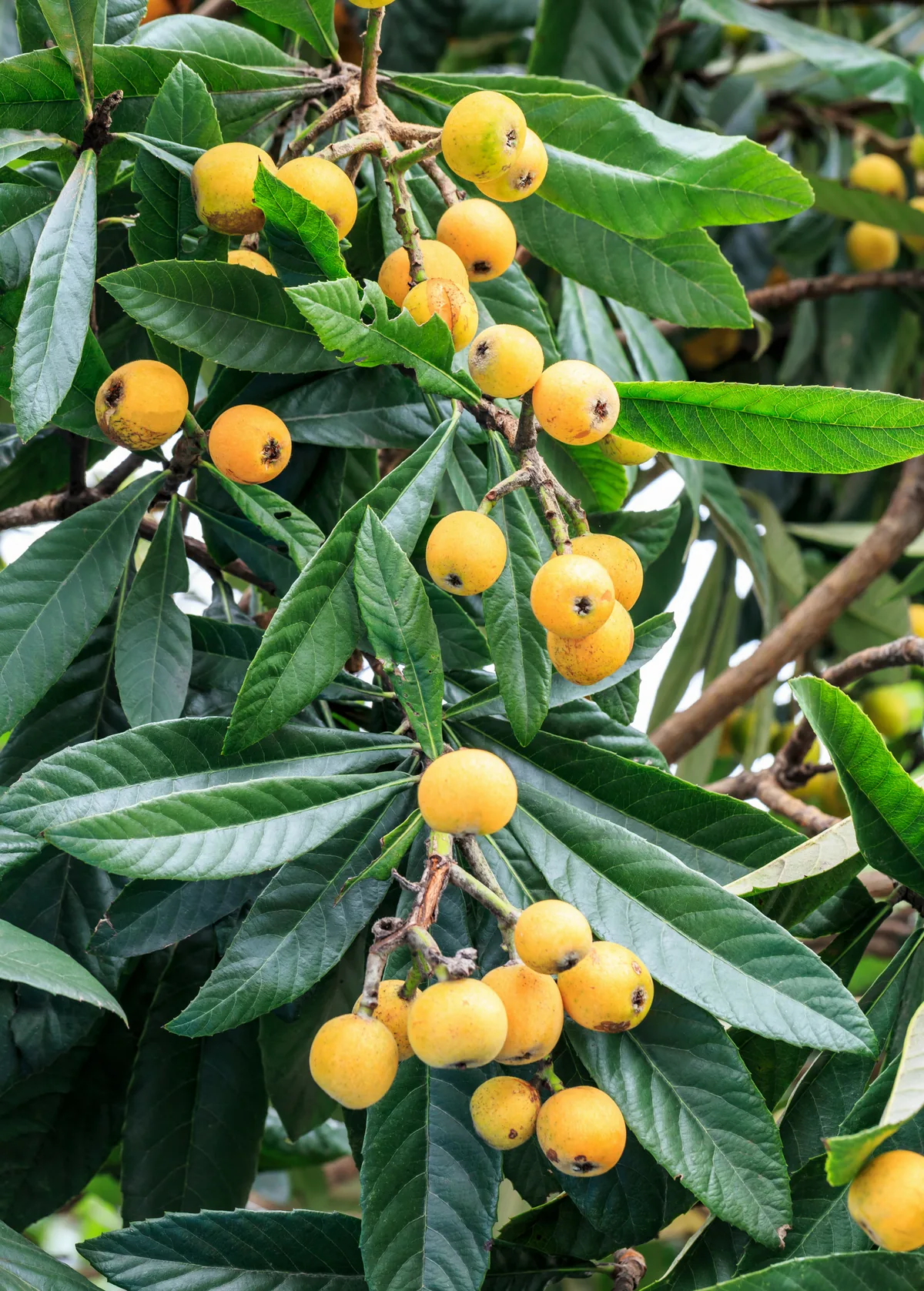
The loquat is an evergreen tree native to China, known for its attractive foliage and delicious fruit. It typically reaches a height of 3-10 meters (10-33 feet) with large, glossy, dark green leaves that add a tropical aesthetic to gardens. The tree produces fragrant white to cream-colored flowers in the autumn, which develop into small, pear-shaped fruits with yellow to orange skin and sweet-tart flesh. Loquats thrive in full sun to partial shade. They prefer slightly acidic to slightly basic, well-drained soils and require regular watering, especially during dry periods. However, they are drought-tolerant once established. Loquats can be propagated by seeds or grafting. Seeds should be planted fresh, as they lose viability quickly. Grafting is preferred for maintaining desired fruit characteristics and can be done using methods like cleft, saddle, or chip budding. Fruit ripens in late winter to early spring. Harvest when fruits are fully colored and slightly soft to the touch. Handle with care to avoid bruising.
Permaculture Functions
- Edible: Yellow pear-shaped fruit ripens late winter into spring in mild climates -- flesh is sweet-tart fresh, makes clear jelly, and ferments to country wine; seeds are large and spit-friendly, not a table grape analog.
- Wildlife Attractor: Soft ripe fruit feeds mockingbirds and cedar waxwings before you get the ladder out -- leave some clusters for late-winter songbird calories when insects are scarce.
- Medicinal: Leaf tea appears in East Asian materia medica for cough and gut comfort -- separate culinary fruit use from concentrated extracts; drug interaction homework applies to any daily medicinal routine.
- Pollinator: Cream autumn flowers sit above cooling vegetable beds and pull honeybees on warm afternoons -- when spring-bloom trees are long finished.
- Mulcher: Leathery evergreen leaves drop in waves and rot to a dark litter layer -- that keeps citrus feeder roots cool through Florida dry spells.
- Erosion Control: Wide lateral roots hold terrace fills and backyard slopes -- where sprinkler runoff would otherwise polish clay bare.
- Animal Fodder: Cattle browse lower branches where fruit hangs out of reach for harvest -- fallen fruit cleans up in poultry yards if you accept the seed-pass-through lottery.
- Windbreaker: Low evergreen canopy filters salt gusts along coastal hedges -- without casting the deep shade of live oak on south-facing vegetable rows.
- Border Plant: Tight line-planting along fence tops screens neighbors -- while staying shorter than mango for urban lots that still want winter fruit.
Field Observations
- No field observations yet
Companion Planting
Threats & Pressure
- Aphids
- Apple Maggot
- Bagworm
- Blackberry Psyllid
- Caribbean Fruit Fly
- Cherry Fruit Fly
- Codling Moth
- Cyclamen Mite
- Fall Webworm
- Lesser Peachtree Borer
- Oriental Fruit Fly
- Oriental Fruit Moth
- Peach Twig Borer
- Peachtree Borer
- Pear Psylla
- Plum Curculio
- Raspberry Beetle
- Raspberry Cane Borer
- Rose Slug
- Sparganothis Fruitworm
- Spittlebugs
- Stink Bug
- Strawberry Root Weevil
- Twig Girdlers
- Vine Weevil
- Armored scale
- Soft scale
- Ambrosia beetles
- Shot hole borers
- Tea scale
- Gall Mite
- Rust Mite
- Spotted Lanternfly
- Brown Marmorated Stink Bug
- Eastern Tent Caterpillar
- Harlequin Ladybird
- Tent Caterpillar