About
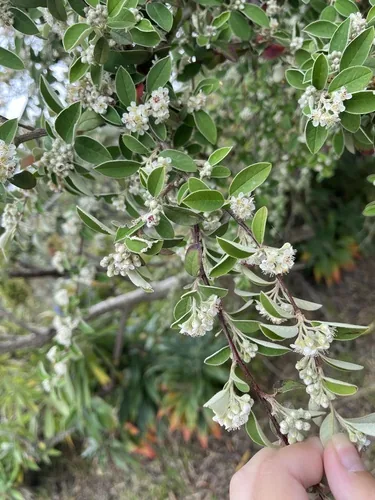
Silverleaf cotoneaster (Cotoneaster pannosus) is an evergreen to semi-evergreen shrub from western China, valued for small silvery leaves, white spring flowers, and red berries that persist for birds. Plants reach 6–10 feet (1.8–3 m), arching and often used on slopes for soil holding. Check local invasive lists before mass planting—some regions regulate cotoneasters. Full sun for densest foliage and best fruiting; partial shade reduces berry display. Well-drained average soils suit it; tolerates drought once established. Avoid wet feet; mulch to buffer roots. Semi-hardwood cuttings in summer with humidity. Sow stratified seed for diversity. Prune after fruiting to shape and open interiors. Berries are wildlife food—leave standing through winter for birds. Spring bloom timing follows local frost exit.
Permaculture Functions
- Erosion Control: Cotoneaster pannosus layered branches touch soil and strike roots along terrace faces -- where shallow gravel wants to slide in winter rains.
- Wildlife Attractor: Small white spring clusters feed bees before rose season -- while persistent red pomes feed thrushes where ordinances still allow fruiting hedges.
- Ornamental: Felted silver leaves catch desert sun beside dark photinia neighbors -- without demanding irrigation budgets.
- Border Plant: Knee- to shoulder-high screens soften utility boxes and dog runs -- while staying shearable tighter than juniper walls.
Companion Planting
- Invasive risk in some regions—verify local regulations before landscape-scale planting
- Fire Blight — prune strikes in dry weather on susceptible rosaceous neighbors
Threats & Pressure
- Aphids
- Apple Maggot
- Bagworm
- Blackberry Psyllid
- Cherry Fruit Fly
- Codling Moth
- Cyclamen Mite
- Fall Webworm
- Lesser Peachtree Borer
- Oriental Fruit Fly
- Oriental Fruit Moth
- Peach Twig Borer
- Peachtree Borer
- Pear Psylla
- Plum Curculio
- Raspberry Beetle
- Raspberry Cane Borer
- Rose Slug
- Sparganothis Fruitworm
- Spider Mites
- Spittlebugs
- Stink Bug
- Strawberry Root Weevil
- Twig Girdlers
- Vine Weevil
- Gall Mite
- Rust Mite
- Spotted Lanternfly
- Brown Marmorated Stink Bug
- Eastern Tent Caterpillar
- Harlequin Ladybird
- Tent Caterpillar