About
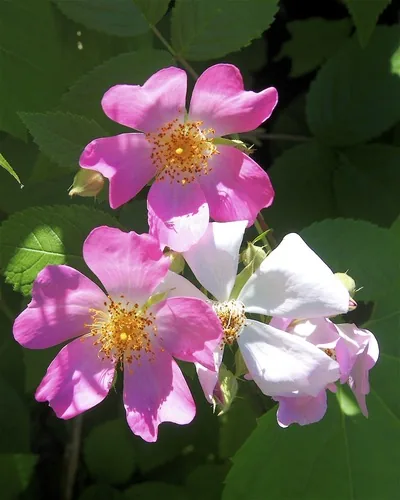
Climbing prairie rose (Rosa setigera) is a native North American rose that behaves as a scrambling shrub or short climber, using curved prickles to lean on neighbors and reach 6–15 feet (1.8–4.5 m) in height or spread. Fragrant pink flowers appear in summer clusters followed by red hips. It suits sunny fencerows, trellises, and meadow edges where you want vertical structure without importing Asian climbing hybrids that pretend ecology is optional. Full sun to light partial shade; flowering and hip production are strongest with ample light. Tolerates average soils; prefers well-drained ground but handles occasional moisture swings once established. Mulch base to reduce competition while canes elongate. Hardwood cuttings in late winter; semi-hardwood in summer with humidity. Layer low canes to soil in spring and detach rooted pieces the following year. Sow stratified seed for diversity breeding. Collect hips when fully colored and slightly soft for tea or jelly traditions; remove seeds carefully. Prune out old unproductive wood after several years to renew flowering shoots—thick gloves, not bravado.
Permaculture Functions
- Wildlife Attractor: Single pink clusters feed native bees -- while red hips carry sugars and vitamin C for birds long after leaves drop.
- Ornamental: Scrambling canes lift fragrant summer flowers on fences and snags -- without demanding hybrid-tea spray schedules.
- Border Plant: Recurved prickles and dense growth turn fencerows into honest no-trespass screens -- for livestock and dogs.
- Erosion Control: Tip-rooting canes stitch loose soil on ditch banks and pasture edges -- where mowing alone will not hold grade.
- Medicinal: Hips enter rose-hip tea and jelly traditions -- remove irritating hairs from seeds before heavy consumption or processing.
Companion Planting
- Rose Rosette Disease — monitor for witches’ broom and remove infected plants per regional guidance
Threats & Pressure
- Aphids
- Apple Maggot
- Bagworm
- Blackberry Psyllid
- Cherry Fruit Fly
- Codling Moth
- Cyclamen Mite
- Fall Webworm
- Japanese Beetles
- Lesser Peachtree Borer
- Oriental Fruit Fly
- Oriental Fruit Moth
- Peach Twig Borer
- Peachtree Borer
- Pear Psylla
- Plum Curculio
- Raspberry Beetle
- Raspberry Cane Borer
- Rose Slug
- Sparganothis Fruitworm
- Spittlebugs
- Stink Bug
- Strawberry Root Weevil
- Twig Girdlers
- Vine Weevil
- Gall Mite
- Rust Mite
- Spotted Lanternfly
- Brown Marmorated Stink Bug
- Eastern Tent Caterpillar
- Harlequin Ladybird
- Tent Caterpillar