About
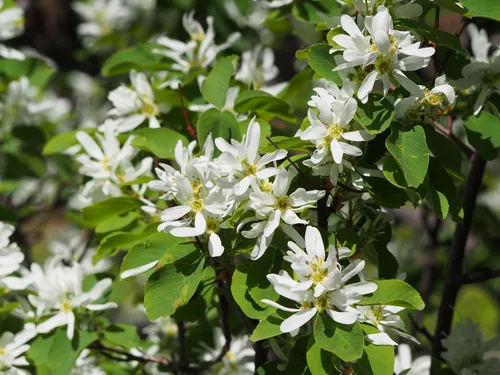
Aronia is a small genus of North American shrubs grown for astringent berries, bright fall color, and cold-hardy tolerance in hedgerows and multifunctional borders; black-fruited Aronia melanocarpa dominates commercial plantings, while red-fruited Aronia arbutifolia brings longer floral tails and red berries for wildlife. Plants are typically 3–8 feet (1–2.4 m), suckering on many sites, and produce white spring clusters followed by pigment-dense fruit that refuses to pose as candy. In permaculture they are the honest hedge crop for juice and preserves—tannins included, no apology marketing. Melanocarpa-type selections emphasize purple-black fruit and red fall foliage; arbutifolia types lean toward red berries and extended floral display for pollinators. Full sun maximizes flowering and berry color; partial shade works but reduces crop. Tolerates damp, acidic soils better than many fruit bushes; still prefers aeration—avoid permanent standing water around the crown. Mulch to maintain organic matter and reduce weed pressure on shallow roots. Softwood cuttings in early summer root under mist or humidity domes. Divide suckers in early spring with roots attached for quick hedge extension. Seeds need cold stratification and patience; clones keep fruit quality predictable. Pick black-fruited forms when fully colored and glossy; red-fruited types when berries deepen and detach tests show ripeness. Process into juice, syrup, or fruit leather; freezing first often improves juice yield. Prune out old weak canes after several years to renew vigor.
Permaculture Functions
- Edible: Aronia melanocarpa berries stay astringent raw but freeze-thaw before pressing yields deep purple juice for syrup and wine -- red-fruited Aronia arbutifolia types extend bird display with similar kitchen chemistry.
- Wildlife Attractor: Spring white cymes feed early bees while autumn berries feed cedar waxwings and robins -- net alternate rows if humans need processing volume without losing every cluster.
- Ornamental: Purple-black fruit against scarlet fall foliage sells the shrub in edible landscaping -- suckering habit means you plan hedge width, not postage-stamp spacing.
- Border Plant: Dense stems slow wind and mark boundaries on wet acidic sites where turf gives up -- prune old canes after fruit to keep centers open without shearing everything into mildew city.
- Pollinator: Open rosaceous flowers offer accessible pollen when canopy trees are still tight buds -- bloom runs cool enough that syrphid flies join bees on cloudy mornings.
Companion Planting
- Apple — shared rosaceous disease pressure during humid springs if canopies interlock tightly
Threats & Pressure
- Aphids
- Apple Maggot
- Bagworm
- Blackberry Psyllid
- Cherry Fruit Fly
- Codling Moth
- Cyclamen Mite
- Fall Webworm
- Japanese Beetles
- Lesser Peachtree Borer
- Oriental Fruit Fly
- Oriental Fruit Moth
- Peach Twig Borer
- Peachtree Borer
- Pear Psylla
- Plum Curculio
- Raspberry Beetle
- Raspberry Cane Borer
- Rose Slug
- Sparganothis Fruitworm
- Spittlebugs
- Stink Bug
- Strawberry Root Weevil
- Twig Girdlers
- Vine Weevil
- Gall Mite
- Rust Mite
- Spotted Lanternfly
- Brown Marmorated Stink Bug
- Eastern Tent Caterpillar
- Harlequin Ladybird
- Tent Caterpillar