About
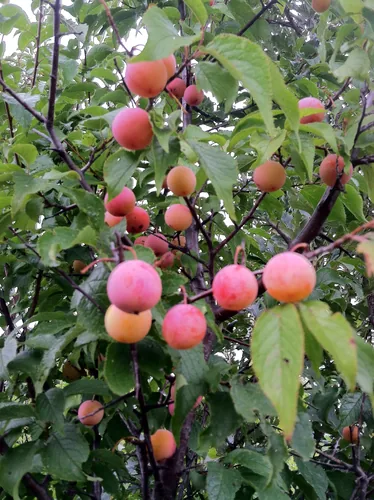
American Beauty plum is a named European plum cultivar (Prunus domestica) grown for large, freestone purple-red fruit with amber flesh and sweet-tart fresh-eating quality. Trees are typical deciduous orchard plums, forming a rounded crown roughly 12–18 feet (3.5–5.5 m) under standard rootstocks and pruning, with white spring blossoms that open before full leaf expansion. It suits temperate backyard orchards and food forests where winter chill hours accumulate and late frosts are managed. Full sun for reliable bloom, fruit set, and sugar development. Deep, well-drained loam is ideal; avoid chronic wet feet that invite root rots. Provide steady soil moisture from bloom through pit hardening, then taper before harvest to concentrate flavor. Mulch to preserve even soil moisture. Commercial trees are grafted onto Prunus rootstocks; bench graft in late winter or bud in summer using scion wood from known-true trees. Seedlings vary wildly and are useful only for rootstock experiments. Hardwood cuttings of plums are unreliable for beginners compared with grafting. Pick when fruit yields slightly to gentle pressure and background color shifts from green to full purple-red—timing varies by season heat. Use immediately for fresh eating, or process into jam, sauce, and dried prunes within days of peak ripeness.
Permaculture Functions
- Edible: Prunus domestica 'American Beauty' plums are freestone with amber flesh suited to fresh eating and jam once skin shifts full purple-red and flesh yields -- thin fruitlets or branches break under self-thinning laziness.
- Pollinator: White five-petaled clusters open before leaves fully expand -- gives honeybees and native bees a concentrated pollen-and-nectar target on cool mornings when orchard cover is still thin.
- Wildlife Attractor: Windfalls feed wasps, butterflies, and songbirds if you leave a messy strip -- humans pick the ladder fruit; wildlife gets the ground honesty layer without guilt theater.
- Ornamental: Glossy summer foliage and spring bloom carry edible landscaping weight along driveways -- fire blight and brown rot still apply, so open vase pruning is not optional decoration.
Companion Planting
- Brown Rot — remove mummified fruit and prune for airflow to reduce fungal pressure
- Fire Blight — less common on plum than apple/pear but sanitize tools on suspicious ooze
Threats & Pressure
- Apple Maggot
- Bagworm
- Blackberry Psyllid
- Cherry Fruit Fly
- Codling Moth
- Cyclamen Mite
- Fall Webworm
- Japanese Beetles
- Lesser Peachtree Borer
- Oriental Fruit Fly
- Oriental Fruit Moth
- Peach Twig Borer
- Peachtree Borer
- Pear Psylla
- Plum Curculio
- Raspberry Beetle
- Raspberry Cane Borer
- Rose Slug
- Sparganothis Fruitworm
- Spittlebugs
- Stink Bug
- Strawberry Root Weevil
- Twig Girdlers
- Vine Weevil
- Gall Mite
- Rust Mite
- Spotted Lanternfly
- Brown Marmorated Stink Bug
- Eastern Tent Caterpillar
- Harlequin Ladybird
- Tent Caterpillar