About
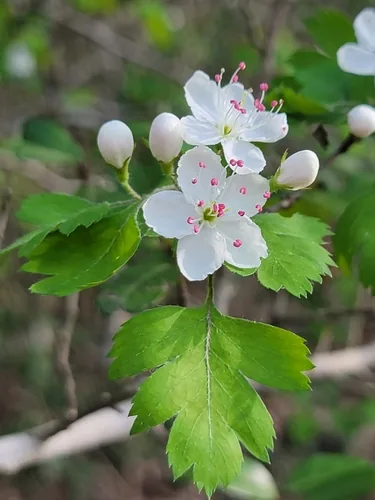
Parsley hawthorn (Crataegus marshallii) is a small native hawthorn of southeastern North American wood margins, named for deeply cut leaves that resemble parsley and for showy white spring flowers followed by red pomes. Plants typically grow 10–20 feet (3–6 m), often multi-stemmed, with thorns that reward honest pruning gloves. It fits permaculture hedgerows for early pollinator support, bird food, and slope stabilization where partial shade and decent drainage exist. Full sun to bright partial shade; best flowering with morning sun and afternoon relief in hot climates. Moist, well-drained loams mimic woodland edges; tolerates occasional dry spells once established but not desert baking without mulch. Avoid standing water over roots. Sow stratified seed after 90–120 days cold-moist; seedlings vary. Take hardwood cuttings in dormancy with hormone and humidity. Prune crossing branches after bloom to improve airflow and reduce leaf-spot drama. Fruit is small and seedy—traditionally used for jellies where sugar and patience exist. Harvest pomes when fully colored and slightly soft; process quickly. Leave some fruit for migrating birds if hedgerow ecology matters.
Permaculture Functions
- Wildlife Attractor: Showy white Crataegus marshallii corymbs feed early native bees; red pomes feed cedar waxwings and migrating thrushes -- leave some fruit for wildlife calendars even when you jelly the rest.
- Erosion Control: Fibrous roots and multi-stem thickets knit terrace cuts and woodland edges where sheet flow would otherwise strip leaf litter -- tolerates occasional wet feet if crown stays above anaerobic muck.
- Border Plant: Parsley-divided leaves and honest thorns define fencelines, pasture corners, and orchard hedgerows when coppiced on rotation -- gloves beat bravado when pruning interior water sprouts after humid summers.
- Edible: Small red pomes run mealy-tart straight off the tree but cook into jellies, ketchups, and country wines once sugar and acid balance match your palate -- verify ID against other hawthorns before bulk foraging.
Companion Planting
- Fire Blight — prune out strikes during dry weather and sanitize tools between cuts
- Thorns — plan paths and ladder placement before the tree disagrees with your jeans
Threats & Pressure
- Aphids
- Apple Maggot
- Bagworm
- Blackberry Psyllid
- Cherry Fruit Fly
- Codling Moth
- Cyclamen Mite
- Fall Webworm
- Japanese Beetles
- Lesser Peachtree Borer
- Oriental Fruit Fly
- Oriental Fruit Moth
- Peach Twig Borer
- Peachtree Borer
- Pear Psylla
- Plum Curculio
- Raspberry Beetle
- Raspberry Cane Borer
- Rose Slug
- Sparganothis Fruitworm
- Spittlebugs
- Stink Bug
- Strawberry Root Weevil
- Twig Girdlers
- Vine Weevil
- Gall Mite
- Rust Mite
- Spotted Lanternfly
- Brown Marmorated Stink Bug
- Eastern Tent Caterpillar
- Harlequin Ladybird
- Tent Caterpillar