About
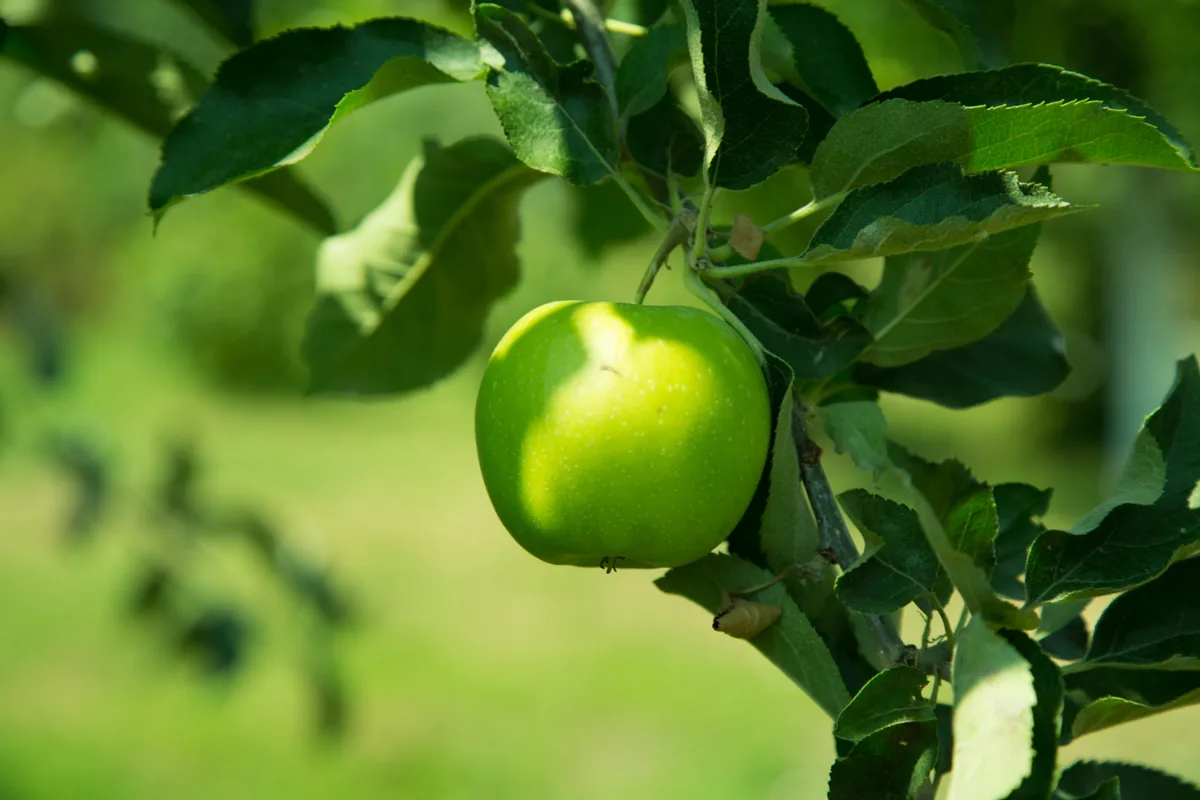
The Green Apple Tree is a deciduous tree renowned for its tart, crisp green fruits. Typically reaching a height of 4.5–6 meters (15–20 feet) with a similar spread, it forms a rounded canopy. In spring, the tree produces fragrant white to pink blossoms, which are pollinated by bees and other insects. It thrives in well-drained loamy soils with a pH between 6.0 and 7.0. Green Apple Trees require full sun, receiving at least 6–8 hours of direct sunlight daily. They prefer consistent moisture but are sensitive to waterlogged conditions. Regular watering is essential, especially during dry periods, to maintain soil moisture without oversaturation. Propagation is commonly achieved through grafting to ensure the desired fruit characteristics. This involves joining a scion from a preferred variety onto a compatible rootstock. Seed propagation is possible but often results in unpredictable fruit quality and tree characteristics. Harvesting typically occurs in late summer to early fall, depending on the specific variety and local climate. Apples are ready to pick when they have developed full coloration and detach easily from the branch with a gentle twist.
Permaculture Functions
- Edible: Malus domestica 'Granny Smith' yields firm, tart green apples that store for months -- eat out of hand once sugar rises in storage, bake into pies, or juice for sharp cider that needs blending with sweeter varieties.
- Medicinal: Fruit pectin and polyphenols from peel support traditional digestive uses -- eat the flesh for soluble fiber, but remember fructose loads and dental acid if you live on daily apples.
- Wildlife Attractor: Codling moths and apple maggots audition first, then songbirds pick pecks from windfalls -- plan sanitation, traps, or sacrificial drops so pests do not define your entire harvest story.
- Pollinator: Clusters of white to pink five-petaled flowers offer nectar and pollen to early bees when nights are still cool -- plant two compatible varieties or a crabapple pollinizer so fruit sets reliably.
- Windbreaker: A row of semi-dwarf trees slows desiccating wind across vegetable beds -- space trunks for equipment and keep lower skirts lifted so airflow reduces scab-susceptible leaf carpets.
- Border Plant: Trained apples mark orchard edges and driveway lines with seasonal blossom and fruit -- underplant with comfrey or chives outside the feeder-root zone so mowing strips stay honest.
Companion Planting
- Walnut
Threats & Pressure
- Aphids
- Apple Maggot
- Bagworm
- Blackberry Psyllid
- Cherry Fruit Fly
- Codling Moth
- Cyclamen Mite
- Fall Webworm
- Lesser Peachtree Borer
- Oriental Fruit Fly
- Oriental Fruit Moth
- Peach Twig Borer
- Peachtree Borer
- Pear Psylla
- Plum Curculio
- Raspberry Beetle
- Raspberry Cane Borer
- Rose Slug
- Sparganothis Fruitworm
- Spittlebugs
- Stink Bug
- Strawberry Root Weevil
- Twig Girdlers
- Vine Weevil
- Gall Mite
- Rust Mite
- Spotted Lanternfly
- Brown Marmorated Stink Bug
- Eastern Tent Caterpillar
- Harlequin Ladybird
- Tent Caterpillar