About
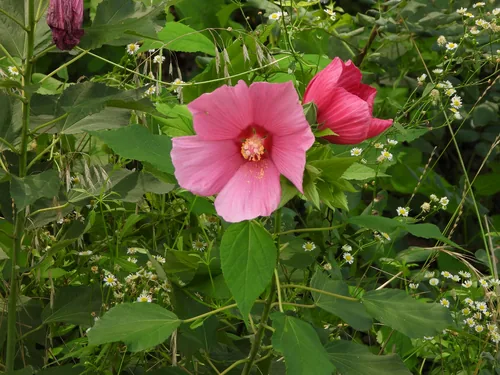
Swamp rose (Rosa palustris) is a native wetland rose of eastern North America, forming arching canes with pink fragrant flowers in summer and red hips that persist for birds. Plants reach 4–7 feet (1.2–2.1 m), rooting where soils stay moist to wet. It stabilizes pond margins, rain-garden backs, and any sunny wet edge tired of invasive pretenders. Full sun to light shade; best flowering with strong light. Moist to wet, acidic to neutral soils suit it; tolerates seasonal inundation better than dry-site roses. Mulch with organic matter; avoid drought baking on sandy banks without irrigation. Hardwood cuttings in dormancy; stratified seed for diversity. Remove old canes after several years to renew flowering wood. Hips for tea and jelly when fully colored—verify spray history. Peak bloom tracks mid-summer warmth. Leave fruit for birds if sharing matters.
Permaculture Functions
- Wildlife Attractor: Rosa palustris single pink blooms perfume June humid air -- before marble-sized hips feed swamp sparrows after first frost.
- Erosion Control: Thorny suckering roots weld cane-break mud along beaver ponds and detention swales -- where turf keeps drowning.
- Border Plant: Arching vicious canes screen pond pumps -- while letting frog chorus carry over the stems.
- Ornamental: Five-petaled wild roses read delicate above knee-high wetland forbs -- unlike doubled garden hybrids refusing wet feet.
Companion Planting
- Thorns — plan paths before romantic barefoot strolls
- Rose Rosette Disease — remove infected canes; improve spacing where mites thrive
Threats & Pressure
- Aphids
- Apple Maggot
- Bagworm
- Blackberry Psyllid
- Cherry Fruit Fly
- Codling Moth
- Cyclamen Mite
- Fall Webworm
- Japanese Beetles
- Lesser Peachtree Borer
- Oriental Fruit Fly
- Oriental Fruit Moth
- Peach Twig Borer
- Peachtree Borer
- Pear Psylla
- Plum Curculio
- Raspberry Beetle
- Raspberry Cane Borer
- Rose Slug
- Sparganothis Fruitworm
- Spider Mites
- Spittlebugs
- Stink Bug
- Strawberry Root Weevil
- Twig Girdlers
- Vine Weevil
- Gall Mite
- Rust Mite
- Spotted Lanternfly
- Brown Marmorated Stink Bug
- Eastern Tent Caterpillar
- Harlequin Ladybird
- Tent Caterpillar