About
Garden huckleberry (Solanum melanocerasum) is a fast-growing warm-season solanaceous annual widely grown in temperate to subtropical gardens for cooked berries and sometimes young cooked greens, with glossy leaves and dark fruits that demand full ripening and cooking—green berries and foliage carry solanine baggage. It is not a wild Vaccinium huckleberry; the name is garden-center poetry. Use it in diversified annual beds, subsistence polycultures, and teaching gardens where nightshade literacy is part of the curriculum. Full sun; fertile, well-drained loam with steady moisture yields largest plants. Heat-tolerant in humid summers; stops hard below about 50°F (10°C) growth thresholds. Avoid waterlogging—damping-off murders seedlings. In cool-temperate zones, start transplants indoors after last frost risk. Sow seeds indoors 6–8 weeks before warm planting or direct-sow into warm soil. Take soft tip cuttings in tropical perennializations if you overwinter plants in frost-free tunnels. Pick leaves young for cooking greens. Harvest berries only when fully soft, dark, and ripe; cook into pies or jams with sugar and acid—never snack unripe fruit unless you enjoy solanine theater.
Permaculture Functions
- Edible: Solanum melanocerasum berries cook into pie fillings with acid and sugar only after full soft ripeness clears green-stage solanine -- this is nightshade fruit, not Vaccinium huckleberry, and young leaves need cooking like other solanum greens.
- Biomass: Six-foot annual haulms chop into hot compost after frost kills vines so calcium-heavy stems balance nitrogen kitchen scraps by November on rows you already stripped fruit from -- before first hard freeze blackened stems entirely.
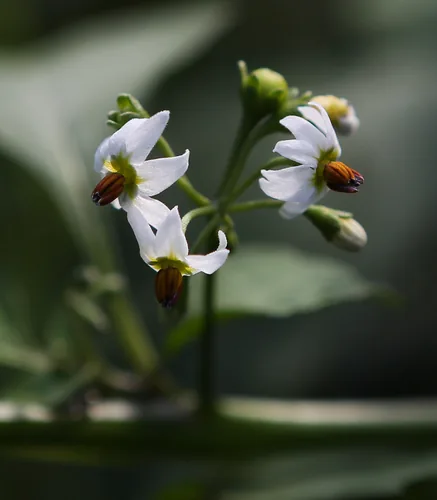
- Wildlife Attractor: Purple star solanum flowers pull bumble visits in annual beds -- where determinate tomatoes already stopped flowering in August heat on the same south-wall microclimate you mulched with straw bales not plastic.
- Border Plant: Glossy foliage screens compost corrals on south-wall microclimates -- where you need a six-foot annual screen tall enough to hide bins from alley sight lines without committing to permanent bamboo you would regret after first rhizome escape.
Companion Planting
Threats & Pressure