About
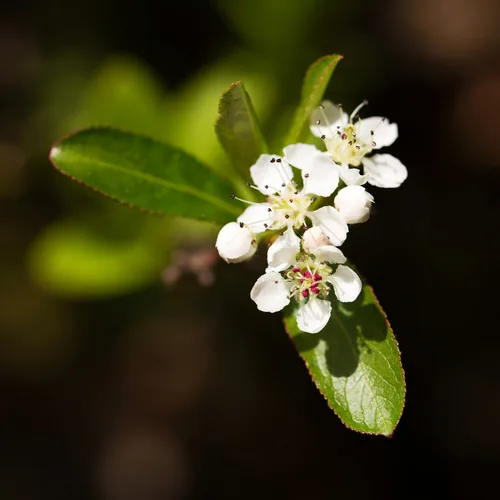
Black chokeberry (Aronia melanocarpa) is a suckering North American shrub cultivated for dense clusters of purple-black, astringent berries used in juice, wine, and antioxidant-rich products, plus red fall foliage and white May blossoms. Plants commonly reach 3–6 feet (0.9–1.8 m), forming thickets useful in hedgerows, rain-garden margins, and multifunctional borders. Unlike sweet dessert bushes, aronia tells the truth in the mouth—tannins first, sugar in the kitchen. Full sun maximizes flowering, anthocyanins, and yield; partial shade works but thins fruit. Tolerates wet, acidic soils better than many fruit shrubs; still avoid permanently stagnant crowns. Organic mulch maintains soil moisture and feeds the shallow root mat. Softwood cuttings in early summer root under humidity. Divide suckers in spring with roots attached for fast hedge extension. Seeds require cold stratification; clones preserve named cultivar traits like larger berries or upright habit. Pick when berries are fully black, glossy, and detach with a gentle tug test on sample clusters. Freeze before pressing for juice to improve yield. Renew pruning by removing oldest canes after several years to keep production on vigorous wood.
Permaculture Functions
- Edible: Aronia melanocarpa glossy black berries need freezing before pressing for higher juice yield in home kitchens -- astringency is data; sugar and acid in the pot fix what raw handfuls cannot.
- Wildlife Attractor: May white cymes feed native bees while autumn berries feed cedar waxwings -- alternate-row netting if humans need gallons beyond what wildlife tax covers.
- Ornamental: Purple-black fruit against scarlet fall leaves beats purely decorative shrubs on wet acidic berms -- upright cultivars hedge cleaner than floppy seedlings.
- Border Plant: Suckering thickets mark compost-yard edges and slow cross-yard wind without formal fencing -- renewal prune oldest canes after fruit so centers stay productive.
- Mulcher: Thin rosaceous leaves drop into hedge feet, feeding fungal duff for blueberry partners -- rake only where mats smother spring ephemerals you still want visible.
Companion Planting
- Apple — humid springs can share rosaceous disease pressure when canopies intertwine
Threats & Pressure
- Aphids
- Apple Maggot
- Bagworm
- Blackberry Psyllid
- Cherry Fruit Fly
- Codling Moth
- Cyclamen Mite
- Fall Webworm
- Japanese Beetles
- Lesser Peachtree Borer
- Oriental Fruit Fly
- Oriental Fruit Moth
- Peach Twig Borer
- Peachtree Borer
- Pear Psylla
- Plum Curculio
- Raspberry Beetle
- Raspberry Cane Borer
- Rose Slug
- Sparganothis Fruitworm
- Spittlebugs
- Stink Bug
- Strawberry Root Weevil
- Twig Girdlers
- Vine Weevil
- Gall Mite
- Rust Mite
- Spotted Lanternfly
- Brown Marmorated Stink Bug
- Eastern Tent Caterpillar
- Harlequin Ladybird
- Tent Caterpillar