About
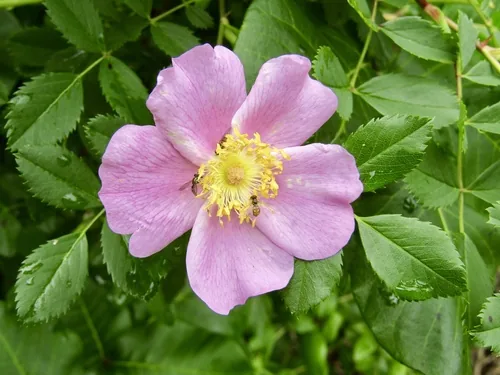
Carolina rose (Rosa carolina) is a native North American wild rose forming low colonies from rhizomes, with pink fragrant flowers in late spring to summer and red rose hips in autumn. Height is typically 1–3 feet (0.3–0.9 m) on open sites, taller in partial shade with support from neighbors. Straight prickles on stems remind mammals that shortcuts have consequences. In permaculture it is a thorny edge plant for pollinators, rose hip tea traditions, and soil holding on sunny banks where formal roses would demand spray schedules. Full sun to light partial shade; more sun yields more bloom and hips. Tolerates average to dry soils once established; prefers well-drained ground and sulks in permanent bog without aeration. Mulch reduces competition while colonies expand. Dig rooted rhizome sections in dormancy or early spring. Sow cleaned seed after warm-cold stratification cycles. Hardwood cuttings taken in fall can root in protected beds. Collect hips after color ripens and before excessive desiccation on the plant; remove seeds carefully if making teas or jellies. Prune out old woody centers periodically to renew flowering wood—leather gloves, not optimism.
Permaculture Functions
- Wildlife Attractor: pink single flowers feed native bees -- while red hips persist for birds and small mammals into winter if hips are not all deadheaded for tea.
- Border Plant: straight prickles and rhizomatous suckers weave informal livestock barriers along pasture paths -- where managers accept thorny architecture instead of wire alone.
- Ornamental: low colonies bloom simple five-petaled pink cups on blue-green foliage -- that suits meadow edges without spray schedules demanded by hybrid teas on thin soil.
- Erosion Control: rhizomes spread laterally through sunny banks and old-field margins, binding topsoil -- where intermittent drought still beats constant wet feet.
- Medicinal: hips infuse for vitamin C–rich teas and syrups after seeds are strained -- while petals appear in mild rose preparations where ID and pesticide history stay verified.
Companion Planting
- Thorns — design access paths before thickets mature into blood oaths
- Rose Rosette Disease — monitor for witches’ broom symptoms and remove infected plants per regional guidance
Threats & Pressure
- Aphids
- Apple Maggot
- Bagworm
- Blackberry Psyllid
- Cherry Fruit Fly
- Codling Moth
- Cyclamen Mite
- Fall Webworm
- Japanese Beetles
- Lesser Peachtree Borer
- Oriental Fruit Fly
- Oriental Fruit Moth
- Peach Twig Borer
- Peachtree Borer
- Pear Psylla
- Plum Curculio
- Raspberry Beetle
- Raspberry Cane Borer
- Rose Slug
- Sparganothis Fruitworm
- Spittlebugs
- Stink Bug
- Strawberry Root Weevil
- Twig Girdlers
- Vine Weevil
- Gall Mite
- Rust Mite
- Spotted Lanternfly
- Brown Marmorated Stink Bug
- Eastern Tent Caterpillar
- Harlequin Ladybird
- Tent Caterpillar