About
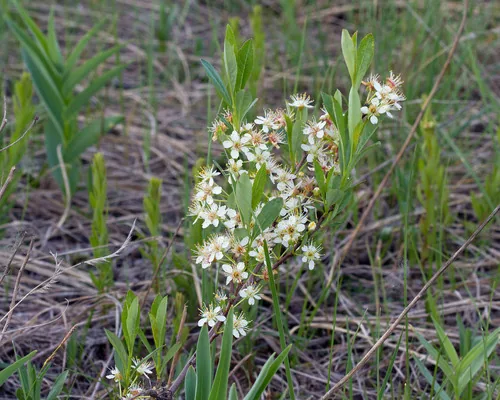
Buffalo plum commonly refers to western sand cherry (Prunus besseyi), a suckering shrub of Great Plains sandhills and rocky soils bearing fragrant white spring flowers and black edible cherries on a plant that often stays under 4–6 feet (1.2–1.8 m). It spreads by roots into thickets stabilizing blowing sand and feeding wildlife during harsh seasons. In cold, dry-temperate systems it is a pioneer fruiting shrub for hedgerows and windbreak understories where irrigation is scarce and honesty about flavor matters. Full sun for best flowering and fruit; tolerates wind exposure once established. Prefers sandy or gravelly well-drained soils; tolerates drought better than pampered orchard hybrids. Occasional deep watering during fruit swell improves size; mulch reduces moisture swing at the root collar. Dig rooted suckers in early spring; softwood cuttings in early summer root under humidity. Sow pits after stratification for breeding diversity. Prune old stems to renew fruiting wood inside thickets. Pick cherries when black, soft, and fully colored—flavor is tart and true. Use in jams, wines, or syrups; fresh eating is seed-forward. Net or accept bird share depending on your ethics and pantry goals.
Permaculture Functions
- Edible: Prunus besseyi black drupes stay tart straight off the bush -- so kitchens pit them into jam or wine where sugar and acid tests match cherry recipes scaled down for small fruit.
- Wildlife Attractor: Fragrant white May flowers pull native bees -- July fruit disappears to robins and raccoons unless you net the outer suckers you marked for yourself.
- Border Plant: Suckering shrubs stay under 2 m on windy Great Plains lots -- giving a living fence that survives drought better than hybrid purple-leaf sand cherry.
- Erosion Control: Roots run wide in blow-sand -- holding dune faces where taller trees would rock until guy wires go in.
- Ornamental: Glossy green leaves and black fruit shine against silver sage companions on xeric berms -- without drip-line flowers.
Companion Planting
- Suckering into paths — plan barriers or mowing strips before thicket annexes the driveway
Threats & Pressure
- Aphids
- Apple Maggot
- Bagworm
- Blackberry Psyllid
- Borers
- Cherry Fruit Fly
- Codling Moth
- Cyclamen Mite
- Fall Webworm
- Japanese Beetles
- Lesser Peachtree Borer
- Oriental Fruit Fly
- Oriental Fruit Moth
- Peach Twig Borer
- Peachtree Borer
- Pear Psylla
- Plum Curculio
- Raspberry Beetle
- Raspberry Cane Borer
- Rose Slug
- Sparganothis Fruitworm
- Spittlebugs
- Stink Bug
- Strawberry Root Weevil
- Twig Girdlers
- Vine Weevil
- Gall Mite
- Rust Mite
- Spotted Lanternfly
- Brown Marmorated Stink Bug
- Eastern Tent Caterpillar
- Harlequin Ladybird
- Tent Caterpillar