About
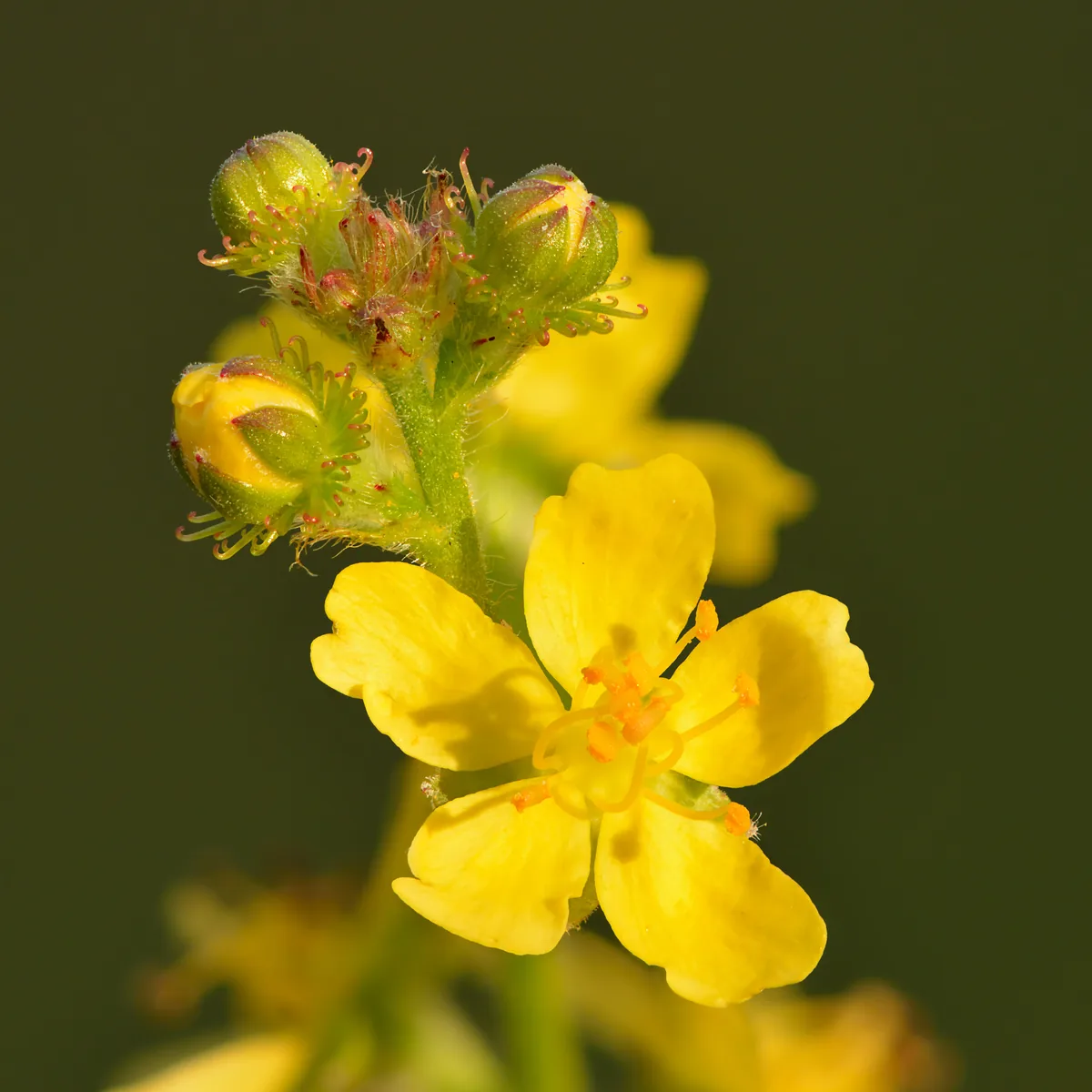
Agrimony (Agrimonia eupatoria) is a clumping herbaceous perennial in the rose family, native to Europe and naturalized in parts of North America. It forms upright stems roughly 2–4 feet tall with pinnately compound leaves softly hairy beneath and slender spikes of small yellow flowers that ripen into burr-like fruits that snag socks with enthusiasm. In subtropical and tropical Americas it is a cooler-season or north-Florida personality: the Panhandle and elevated sites tolerate it more than steamy tropical and subtropical zones lowlands, while Puerto Rico gardeners may treat it as a high-elevation or winter-active curiosity unless a local ecotype proves otherwise. Humidity increases foliar disease pressure—airflow matters. Full sun to light shade; more shade in the hottest end of its range. Average, well-drained soil; steady moisture beats boom-bust irrigation; avoid standing water around the crown. Seeds: cold-moist stratify several weeks, surface-sow in spring; expect variable germination. Division of established clumps in early spring or fall when the crown is visible—faster than seed for a defined hedge row. Harvest aerial parts at early bloom for traditional herb use; dry quickly in thin layers to reduce mold in humid air. Leave late flowers for pollinators if you are not running a commercial drying rack—ethics beat maximalist stripping.
Permaculture Functions
- Medicinal: Agrimonia eupatoria flowering tops yield mild astringent tannins used in European throat teas and topical washes -- harvest at early yellow spike before hooked fruits form unless you enjoy tweezing fabric.
- Pollinator: Five-petaled yellow cups open sequentially up a three-foot (0.9 m) wand, feeding small Andrenid bees and tachinid flies through July heat when clover is already brown -- each flower lasts a day, so the spike stays open for weeks.
- Wildlife Attractor: Hooked burrs snag on deer hair and dog legs, spreading seed to disturbed edges where juncos later pick fallen nutlets from gravel -- plan row ends away from public paths if you hate sock Velcro.
- Border Plant: Vertical spires of soft pinnate leaves read as rhythm markers between lower catmint and taller ironweed -- tolerates half-day shade on east fences without mildew if air moves.
- Ground Cover: Basal rosettes overwinter flat under snow, shading bare mud between taller perennials in spring -- not a turf substitute, but effective at crowding annual chickweed until warm-season grasses wake.
Threats & Pressure
- Aphids
- Apple Maggot
- Bagworm
- Blackberry Psyllid
- Cherry Fruit Fly
- Codling Moth
- Cyclamen Mite
- Fall Webworm
- Japanese Beetles
- Lesser Peachtree Borer
- Oriental Fruit Fly
- Oriental Fruit Moth
- Peach Twig Borer
- Peachtree Borer
- Pear Psylla
- Plum Curculio
- Raspberry Beetle
- Raspberry Cane Borer
- Rose Slug
- Sparganothis Fruitworm
- Spittlebugs
- Stink Bug
- Strawberry Root Weevil
- Twig Girdlers
- Vine Weevil
- Gall Mite
- Rust Mite
- Spotted Lanternfly
- Brown Marmorated Stink Bug
- Eastern Tent Caterpillar
- Harlequin Ladybird
- Tent Caterpillar