About
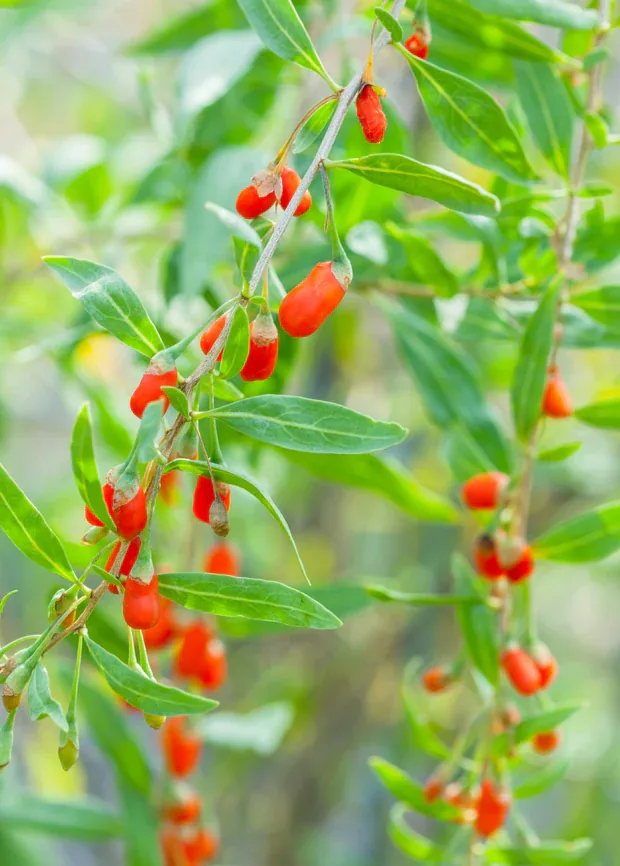
The Goji Berry (Lycium barbarum) is a deciduous woody shrub native to East Asia, growing between 1 to 3 meters in height. It features arching branches with pale gray bark and lanceolate leaves that are green and slightly fleshy. The plant produces small, tubular flowers that are lavender or light purple, leading to bright orange-red, ellipsoid berries approximately 1-2 cm in diameter. These berries are renowned for their sweet taste and high nutritional value. Goji berries prefer full sun, receiving around 6-8 hours of direct sunlight daily. While they can tolerate partial shade, berry production may decrease with reduced light. They thrive in well-draining soils rich in organic matter and can tolerate moderately fertile soils, including clay. During the first year, maintain consistent soil moisture to help establish the plant; once established, goji berries become drought-tolerant. Mulching around the base helps retain soil moisture and suppress weeds. :contentReference[oaicite:0]{index=0} Goji berries can be propagated through seeds, cuttings, or division. Seed propagation involves planting seeds in well-draining soil and keeping them moist until germination. Softwood or hardwood cuttings can be taken and rooted in a suitable medium. Division of established plants is also possible, ensuring each division has adequate roots for successful transplantation. The berries ripen from late summer to early autumn, typically from August to October in the Northern Hemisphere. Harvest the bright orange-red berries when they are fully colored and slightly soft to the touch. Handle them gently to avoid bruising, as they are delicate when fresh.
Permaculture Functions
- Edible: Orange-red oblong berries hang in late summer -- eat fresh off the thorny cane, dry on screens for chewy snacks, or simmer into broth with chicken the way northern Chinese kitchens do.
- Medicinal: Fruits and root bark show up in TCM formulas for liver-kidney yin patterns and eye fatigue -- blood thinner and diabetes medication lists flag Lycium; dose is a clinician conversation, not a blog tablespoon.
- Wildlife Attractor: Robins strip canes before you get the ladder -- carder bees work the pale lilac tubes in June when apples are done blooming but basswood is not yet open.
- Border Plant: Arching canes to nine feet make a thorny living fence on sunny fence lines -- where deer pressure is moderate and you still want winter silhouette after leaves fall.
- Pollinator: Small tubular flowers offer nectar and pollen on new wood -- prune after fruit if you want shorter renewal wood for next season's bloom height.
- Mulcher: Autumn leaf drop is light but zinc-rich compared with lawn clippings -- rake into berry row mulch to feed soil fungi that partner with fibrous roots.
Field Observations
- No field observations yet
Companion Planting
- None specifically documented
Threats & Pressure
- Andean Potato Weevil
- Aphids
- Broad Mite
- Colorado Potato Beetle
- Corn Earworm
- Cyclamen Mite
- Flea Beetles
- Greenhouse Whitefly
- Leafhoppers
- Pepper Weevil
- Reniform Nematode
- Root Aphid
- Shore Fly
- Silverleaf Whitefly
- Spider Mites
- Stink Bug
- Tobacco Budworm
- Tomato Hornworms
- Wireworm
- Rust Mite
- Spotted Cucumber Beetle
- Brown Marmorated Stink Bug