About
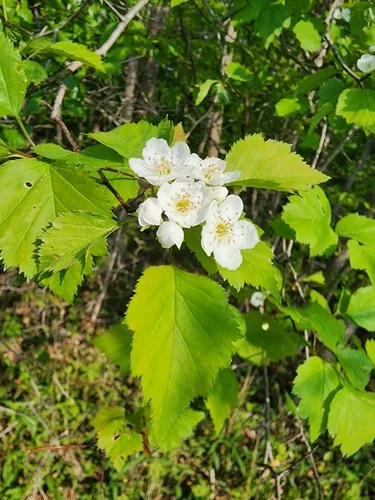
Frosted hawthorn (Crataegus pruinosa) is a deciduous rosaceous tree or large shrub of eastern North American wood margins, thickets, and old fields, named for the waxy bloom that makes ripe haws look frosted. Height often ranges 15–25 feet (4.5–7.5 m) with a thorny framework and white spring blossoms. It is a wildlife hedgerow workhorse and a modest fruit crop for jelly makers who enjoy tart chemistry. Full sun to light shade; more sun improves flowering and fruit set if moisture exists. Adaptable soils if drainage is reasonable; tolerates alkaline substrates in some genotypes. Mulch the root zone to reduce grass competition while young. Sow seed after warm-cold stratification cycles typical for Crataegus. Graft or bud selected fruit lines for predictable quality. Prune in late winter for open structure; avoid heavy summer topping that invites weak regrowth. Collect haws after the waxy bloom dulls and fruit softens slightly for processing. Taste before committing buckets—astringency varies. Leave clusters for birds if your preservation bandwidth is already full.
Permaculture Functions
- Edible: Crataegus pruinosa waxy-bloomed red haws process to clear jellies after boiling off pectin-rich skins -- sugar balance decides whether jam reads tart or medicinal on spoon tests from the same fifteen-to-twenty-five-foot thorny vase.
- Wildlife Attractor: White May corymbs stack nectar for hawthorn-specialist beetles -- while thorny architecture hosts brown thrasher nest twig density along fencerow four-to-eight zones you prune open for air against brown rot years.
- Erosion Control: Deep rosaceous roots and thorny stems armor old-field edges against deer trail shortcuts -- that would dissect slopes into headcuts on the same clay-loam berms you mulched after removing multiflora rose first.
- Border Plant: Honest thorns mark property corners clearer than polypropylene deer netting that UV-degrades in three seasons on windy exposures -- where frosted hawthorn already survived last winter's polar vortex shrug without wrapping.
Companion Planting
- Fire Blight — watch for shepherd’s crook dieback in humid springs; prune with clean tools
- Thorns — puncture hazard during pruning; wear eye protection and slow down
Threats & Pressure
- Apple Maggot
- Bagworm
- Blackberry Psyllid
- Cherry Fruit Fly
- Codling Moth
- Cyclamen Mite
- Fall Webworm
- Lesser Peachtree Borer
- Oriental Fruit Fly
- Oriental Fruit Moth
- Peach Twig Borer
- Peachtree Borer
- Pear Psylla
- Plum Curculio
- Raspberry Beetle
- Raspberry Cane Borer
- Rose Slug
- Sparganothis Fruitworm
- Spittlebugs
- Stink Bug
- Strawberry Root Weevil
- Twig Girdlers
- Vine Weevil
- Gall Mite
- Rust Mite
- Spotted Lanternfly
- Brown Marmorated Stink Bug
- Eastern Tent Caterpillar
- Harlequin Ladybird
- Tent Caterpillar