About
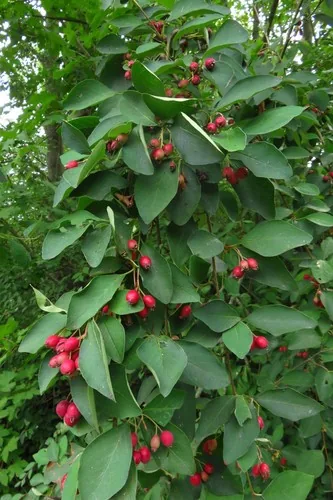
Many flowered cotoneaster (Cotoneaster multiflorus) is a deciduous to semi-evergreen East Asian shrub grown for arching stems, clusters of small white flowers in late spring, and red pome fruit that can persist into winter. Plants often reach 6–10 feet (1.8–3 m) with spreading habit. It suits temperate hedges, slopes, and bird-friendly borders where the species is not listed as invasive and airflow reduces foliar disease pressure. Full sun for best flowering and fruiting; partial shade reduces berry display. Average well-drained soils; tolerates urban conditions once established. Avoid waterlogged clay that rots roots while tags still claim ‘easy’. Semi-hardwood cuttings root under mist in summer. Sow seed after stratification for species reproduction—cultivars should be cloned. Rejuvenate old shrubs with staged pruning over several seasons. Berries feed birds through winter—delay heavy pruning until after wildlife use if possible. Flowers are modest en masse; fruit is the winter paycheck. Thin congested centers to reduce fire blight and mildew pressure.
Permaculture Functions
- Ornamental: Cotoneaster multiflorus arches long stems hung with small white spring clouds and red winter pomes -- reads informal on slopes where boxwood hedges would look silly.
- Wildlife Attractor: Persistent red berries feed thrushes into winter while spring flowers feed bees -- delay heavy pruning until after birds strip fruit if ethics allow.
- Erosion Control: Fibrous mats stabilize sunny banks when massed on well-drained soil -- verify regional invasiveness before planting near natural areas because birds move seed aggressively.
- Border Plant: Low, wide habit smothers weeds under windows -- open interior canopy yearly so fire blight strikes are visible before wood turns black.
Companion Planting
- Invasive in some regions — verify local assessments before planting near natural areas
- Fire Blight — rosaceous risk in humid springs; prune strikes with sanitation
Threats & Pressure
- Apple Maggot
- Bagworm
- Blackberry Psyllid
- Cherry Fruit Fly
- Codling Moth
- Cyclamen Mite
- Fall Webworm
- Lesser Peachtree Borer
- Oriental Fruit Fly
- Oriental Fruit Moth
- Peach Twig Borer
- Peachtree Borer
- Pear Psylla
- Plum Curculio
- Raspberry Beetle
- Raspberry Cane Borer
- Rose Slug
- Scale Insects
- Sparganothis Fruitworm
- Spittlebugs
- Stink Bug
- Strawberry Root Weevil
- Twig Girdlers
- Vine Weevil
- Gall Mite
- Rust Mite
- Spotted Lanternfly
- Brown Marmorated Stink Bug
- Eastern Tent Caterpillar
- Harlequin Ladybird
- Tent Caterpillar