About
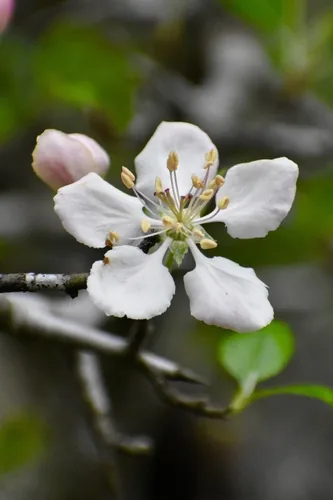
Prairie crabapple (Malus ioensis) is a small native tree of central North American prairies and savannas, famous for fragrant pink spring blossoms and small yellow-green fruit that hangs into winter for birds. Heights of 15–25 feet (4.5–7.5 m) are typical, often with a broad crown and occasional thorns on wild forms. It is a hardy rootstock candidate, hedgerow anchor, and pollinizer for orchard apples where cross-compatibility is confirmed. Full sun for best flowering and fruiting; tolerates light shade with fewer blooms. Average to moist, well-drained soils suit it; tolerates clay if drainage is not stagnant. Mulch to reduce grass competition while young; deep watering speeds establishment in dry years. Sow stratified seed; seedlings vary in thorniness and fruit quality. Graft cultivars onto seedling roots for predictable ornament or fruit. Prune for an open vase shape to improve airflow and reduce scab pressure. Fruit is small and tart—jelly, pectin, and wildlife food are honest uses. Pick after color ripens and before complete bird depredation if humans want a share. Bloom timing tracks local spring warmth after hard freezes near 24°F (-4°C) risk passes.
Permaculture Functions
- Edible: Malus ioensis small yellow-green pomes run tart-astringent straight off the tree but cook into high-pectin jelly and cider vinegar once sugar and acid tests match your palate -- not a dessert apple; think hedgerow utility.
- Wildlife Attractor: Pink malus blossoms feed mason bees and hoverflies before pasture grasses warm; persistent fruit feeds cedar waxwings through winter lean weeks -- leave some clusters uncut if migration calories matter.
- Pollinator: Profuse spring bloom overlaps orchard apples for shared pollinizer service where compatibility tests say yes -- still verify graft compatibility before topworking commercial scions onto wild-type thorn seedlings.
- Border Plant: 4–7 m rounded crowns mark savanna fencelines and windbreak understories without shading entire hay fields -- thorny wild forms need path planning before kids learn shortcuts through the row.
Companion Planting
- Fire Blight — prune strikes in dry weather; sanitize tools between cuts
- Thorny wild forms — plan paths before planting seedling lottery surprises
Threats & Pressure
- Apple Maggot
- Bagworm
- Blackberry Psyllid
- Cherry Fruit Fly
- Codling Moth
- Cyclamen Mite
- Fall Webworm
- Japanese Beetles
- Lesser Peachtree Borer
- Oriental Fruit Fly
- Oriental Fruit Moth
- Peach Twig Borer
- Peachtree Borer
- Pear Psylla
- Plum Curculio
- Raspberry Beetle
- Raspberry Cane Borer
- Rose Slug
- Sparganothis Fruitworm
- Spittlebugs
- Stink Bug
- Strawberry Root Weevil
- Twig Girdlers
- Vine Weevil
- Gall Mite
- Rust Mite
- Spotted Lanternfly
- Brown Marmorated Stink Bug
- Eastern Tent Caterpillar
- Harlequin Ladybird
- Tent Caterpillar