About
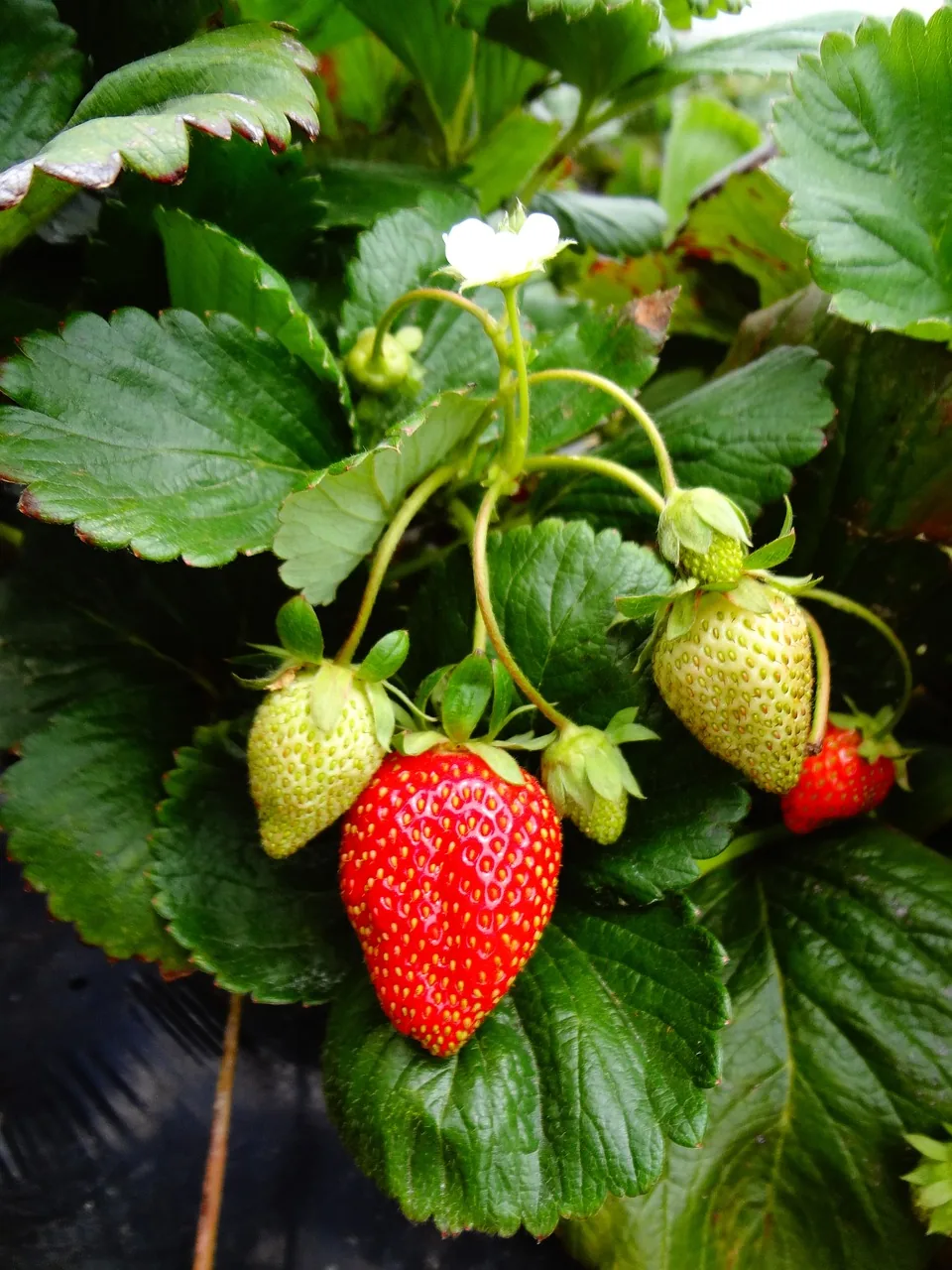
Strawberry plants are low-growing, spreading perennials that produce sweet, red fruits. They spread via runners and are commonly grown in garden beds, containers, or as ground cover. The plant has trifoliate green leaves with serrated edges, and it produces small white or pink flowers before fruiting. Strawberries thrive in well-draining soil rich in organic matter. They require full sun and consistent moisture to produce a bountiful harvest. The plant attracts pollinators, especially bees, and provides a food source for wildlife. Requires full sun (6-8 hours per day). Prefers moist but well-drained soil. Regular watering is necessary, but avoid waterlogging. Runners: The primary method; daughter plants root and establish themselves. Seeds: Less common; requires cold stratification for germination. Division: Established clumps can be divided every 3 years for better yield. Harvest when berries are fully red and plump. Best picked in the morning when temperatures are cooler. Continual harvesting encourages more fruit production.
Permaculture Functions
- Edible: June-bearing cultivars give one heavy flush for jam logistics; day-neutrals trickle fruit all season for salads -- crown-set depth matters because buried crowns rot and heaved crowns winter-kill.
- Wildlife Attractor: Mockingbirds and chipmunks run the row the day before you planned to pick -- floating row cover on hoops beats partial nets that always leave one hole.
- Pollinator: Open white Fragaria flowers offer easy pollen to small native bees and syrphid flies during cool spring weather when honeybee flight hours are short -- undersized fruit usually traces to incomplete pollination, not fertilizer.
- Border Plant: Matted runners edge paths and stone fruit underplantings at six to eight inches tall where taller ground covers would shade low graft unions -- shear ragged ends with scissors so traffic does not tear stolons.
- Dynamic Accumulator: Shallow adventitious roots plus constant mulch topdressing capture calcium and potassium from compost tea and fish emulsion pours before those ions leach past the twelve-inch root zone -- when you renovate beds, that lifted runner mat carries the fertility bank to the compost pile or new row.
Field Observations
- No field observations yet
Companion Planting
- Cabbage
- Kale
- Broccoli
- Tomatoes
- Peppers
Threats & Pressure
- Aphids
- Apple Maggot
- Bagworm
- Blackberry Psyllid
- Broad Mite
- Cherry Fruit Fly
- Codling Moth
- Cyclamen Mite
- Fall Webworm
- Japanese Beetles
- Lesser Peachtree Borer
- Oriental Fruit Fly
- Oriental Fruit Moth
- Peach Twig Borer
- Peachtree Borer
- Pear Psylla
- Plum Curculio
- Raspberry Beetle
- Raspberry Cane Borer
- Rose Slug
- Slugs
- Sparganothis Fruitworm
- Spider Mites
- Spittlebugs
- Stink Bug
- Strawberry Root Weevil
- Twig Girdlers
- Vine Weevil
- Crane fly larvae
- White grubs
- June beetle grubs
- Chafer grubs
- Root feeding grubs
- Sod webworms
- Root Aphid
- Cutworm larvae
- Glass snails
- Leatherleaf slug
- Clover Mites
- Fungus Gnats
- Gall Mite
- Rust Mite
- Spotted Lanternfly
- Brown Marmorated Stink Bug
- Eastern Tent Caterpillar
- Harlequin Ladybird
- Tent Caterpillar
- Mole crickets
- Jumping worms
- Fungus Gnat