About
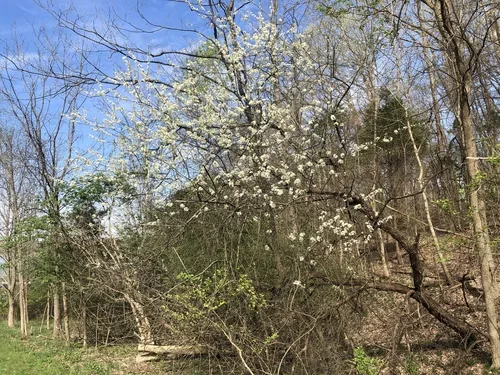
Hortulan plum (Prunus hortulana) is a wild or feral-type plum of central North American uplands and stream edges, forming small trees or thicket-forming shrubs with white spring flowers and red to yellow dotted fruit reported as pleasantly sweet when ripe. Heights often reach 15–20 feet (4.5–6 m). It is a rose-family hedge component for wildlife and foragers who tolerate thorns and variability. Full sun for best flowering and fruit; edge light woodland contexts still fruit with reduced density. Adaptable soils if drainage is reasonable; tolerates periodic moisture near streams. Mulch young plants to reduce grass competition at the trunk. Sow pits after stratification; seedlings vary—graft named selections if you find them. Root suckers can expand thickets—remove or transplant if space is finite. Prune in late winter for open structure and reduced disease pressure. Pick fruit when fully colored and slightly soft—taste before bucket commitment. Process quickly for jam or wine; fruit can ferment on the ground if ignored. Leave some for wildlife if your pantry ethics allow.
Permaculture Functions
- Edible: Prunus hortulana bears variable red-to-yellow plums on thorny small trees -- taste each genotype before scaling jam batches because sweetness and astringency swing widely across seedling thickets.
- Wildlife Attractor: White early-spring blossoms feed pollinators while soft ripe fruit feeds raccoons and birds -- leave upper branches unpruned if wildlife pantry matters more than a manicured fencerow.
- Erosion Control: Suckering thickets bind streambanks and old-field margins where single-stem trees would wash -- tolerate some chaos because root sprouts are the erosion tool, not the enemy.
- Border Plant: Thorny stems and suckering habit make a livestock-respecting hedge -- remove inward-facing branches annually so light reaches fruiting wood and brown rot has fewer humid pockets.
Companion Planting
- Black Walnut — juglone-sensitive plums may struggle under walnut drip lines; site accordingly
- Fire Blight — rosaceous risk in humid springs; prune strikes with sanitation
Threats & Pressure
- Apple Maggot
- Bagworm
- Blackberry Psyllid
- Cherry Fruit Fly
- Codling Moth
- Cyclamen Mite
- Fall Webworm
- Japanese Beetles
- Lesser Peachtree Borer
- Oriental Fruit Fly
- Oriental Fruit Moth
- Peach Twig Borer
- Peachtree Borer
- Pear Psylla
- Plum Curculio
- Raspberry Beetle
- Raspberry Cane Borer
- Rose Slug
- Scale Insects
- Sparganothis Fruitworm
- Spittlebugs
- Stink Bug
- Strawberry Root Weevil
- Twig Girdlers
- Vine Weevil
- Gall Mite
- Rust Mite
- Spotted Lanternfly
- Brown Marmorated Stink Bug
- Eastern Tent Caterpillar
- Harlequin Ladybird
- Tent Caterpillar