About
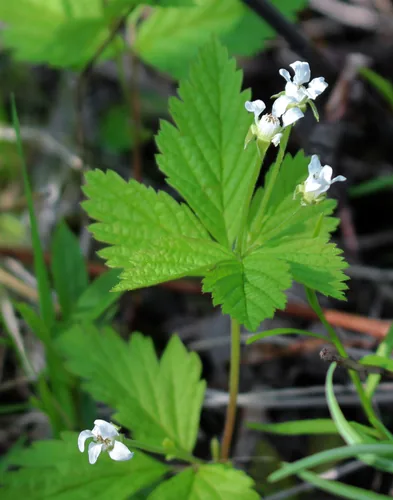
Creeping raspberry (*Rubus hayata-koidzumii*) is a low, evergreen bramble that trails across soil and stone instead of arching upward like traditional cane fruit. Rounded, crinkled leaves often read as quilted; small white flowers may yield modest, edible orange-red fruits that are pleasant but not commercial-crop sized. Mats stay roughly 10–20 cm tall and spread widely by tip-rooting stems. It tolerates heat better than many temperate groundcovers, making it a candidate for subtropical and tropical Americas shade gardens, path edges, and terraces if humidity is paired with drainage. Part shade to dappled sun in hot climates; morning sun with afternoon shade reduces leaf scorch. Rich, well-drained loam with consistent moisture; dries slowly between waterings in humid air to limit fungal spotting. Tip layering: Pin trailing stems to soil until roots anchor, then sever and transplant. Division: Slice rooted mats in cool, moist weather and reset pieces with mulch. Pick soft, fully colored berries for fresh eating or small-batch jams; yields are light—treat as a bonus, not a staple crop. Trim wandering stems that climb into delicate neighbors.
Permaculture Functions
- Edible: Rubus hayata-koidzumii yields modest orange-red berries -- soft when fully colored for fresh eating or small-batch jam, not commercial cane yields.
- Ground Cover: Evergreen crinkled leaves form low mats that tip-root along paths and shade banks -- where turf is a poor fit.
- Erosion Control: Trailing canes and nodal roots armor semi-shaded slopes and stone steps -- effective against surface wash where mowing is impractical.
- Wildlife Attractor: Small white flowers and tiny fruit draw small pollinators and birds -- along semi-wild edges and woodland margins.
Companion Planting
No companion data yet.
Also mentioned as companions:
- Hosta
- Fern
- Hydrangea
- Oakleaf Hydrangea
Not yet profiled in PermiePortal
Threats & Pressure
- Aphids
- Apple Maggot
- Bagworm
- Blackberry Psyllid
- Cherry Fruit Fly
- Codling Moth
- Cyclamen Mite
- Fall Webworm
- Japanese Beetles
- Lesser Peachtree Borer
- Oriental Fruit Fly
- Oriental Fruit Moth
- Peach Twig Borer
- Peachtree Borer
- Pear Psylla
- Plum Curculio
- Raspberry Beetle
- Raspberry Cane Borer
- Rose Slug
- Sparganothis Fruitworm
- Spider Mites
- Spittlebugs
- Stink Bug
- Strawberry Root Weevil
- Twig Girdlers
- Vine Weevil
- Gall Mite
- Rust Mite
- Spotted Lanternfly
- Brown Marmorated Stink Bug
- Eastern Tent Caterpillar
- Harlequin Ladybird
- Tent Caterpillar